Geysers, Groundhogs & Paper Maché: Black & Gray Tank Care With Tim the Tank Man
Geysers, Groundhogs & Paper Maché is sponsored by RV Roofing Solutions — keeping RVers protected on the road.
Let’s Talk About the Thing Nobody Wants to Talk About
Okay, friends. I’m going to say the thing out loud: we need to talk about our tanks.
After three years on the road, we have our own stories. We had a pyramid situation early on, the toilet pedal that got stuck down just a little bit and created a black tank overflow, and other things I can’t disclose for fear of teenage retribution. We got a new-to-us rig this spring, and the very first thing we did was get the tanks professionally cleaned because we wanted to know that only our business was in our tank from day one. Weird? You have a tank overflow and then tell me it’s weird.
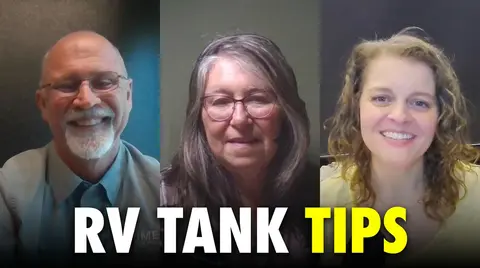
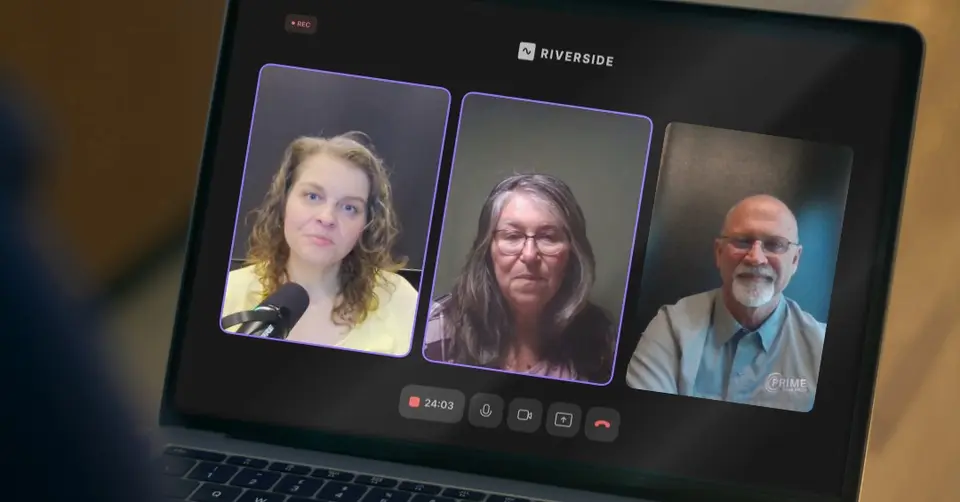
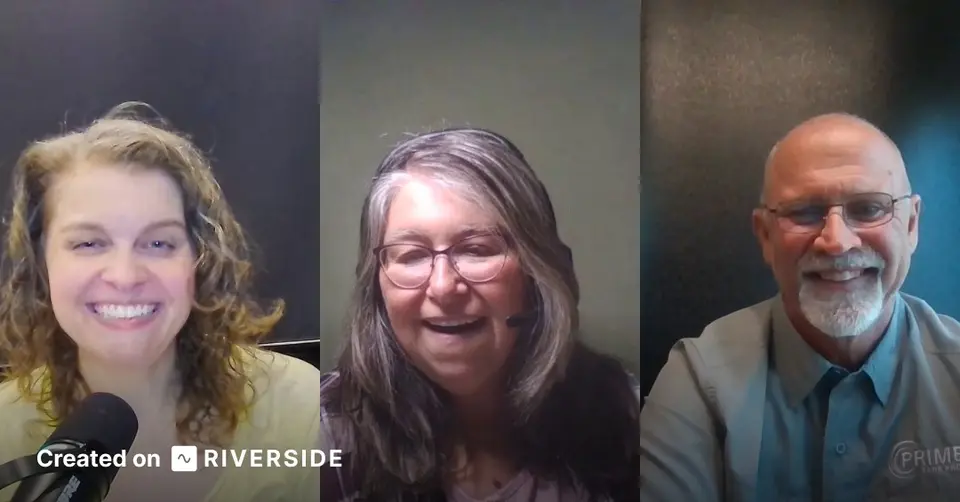
Jennifer and I sat down with Tim of Prime Tank Pros for a conversation that had us in tears from laughing and I genuinely learned some things that I wish I’d known three years ago. Tim is a retired law enforcement officer and HR director turned full-time RVer who got bored in retirement, found a YouTube channel, and ended up building a business cleaning thousands of tanks across the country. His wife, Brenda, is right there with him. They are exactly the kind of people you want in your corner when things go sideways in the wet bay.
“If you see the groundhog in the toilet, it’s too late. You better call me.” — Tim, Prime Tank Pros
What This Episode Is About
This episode of Learn To RV: The Podcast is a deep, funny, and genuinely useful dive into one of the most overlooked parts of RV ownership: your holding tank system. Tim walks us through everything from the basics of what a fresh tank, black tank, and gray tank are to what makes the difference between a healthy system and a seven-hour unclogging nightmare. (Yes, that story is in there. Yes, it is as bad as it sounds.)
There’s also a rapid-fire round at the end where Tim answers things like the worst smell he’s encountered on the job, the one product every RVer should own, and the tank issue that makes him want to cry a little.
Who This Episode Is For
This one is for you if:
• You just bought your first RV and have no idea what to do when the tank is full
• You’ve been on the road a while but never fully understood why your sensors keep lying to you
• You’re a full-timer who wants to know how often you really need a professional cleaning (hint: more often than you think)
• You’re a boondocker trying to conserve water without destroying your tanks
• You bought a used rig and want to start fresh — or are worried about what the previous owners left behind
• You’ve ever used ice cubes or Dawn dish soap and want to know if that was a good idea
And honestly? Even if none of those describe you, Jennifer’s “groundhog” story alone is worth the listen. Frank, I am so sorry. Jennifer is not.

What You’ll Learn
RV Tank Basics: What You Actually Have
I remember the first time someone told me RVs had black tanks and gray tanks and fresh tanks and I thought, I’m sorry, what? Like fish tanks? Gas tanks? What are we talking about here? So we start from the beginning. Tim walks through every tank system on a typical RV:
| Tank | What Goes in It |
| Fresh Tank | Clean water |
| Black Tank | Human waste and toilet paper only |
| Gray Tank (Shower) | Shower water, soap, and, unfortunately, hair |
| Gray Tank (Kitchen) | Kitchen sink water, food particles, and grease |
The One-Two Flush Rule (And Why It Changes Everything)
Tim’s golden rule: use one full bowl of water for number one, two full bowls for number two. Always. Every time. And after you dump your tanks, put five to ten gallons back in so there’s a buffer in the tank. It sounds simple because it is. But most tank problems? Not enough water. That’s it. That’s the culprit most of the time.
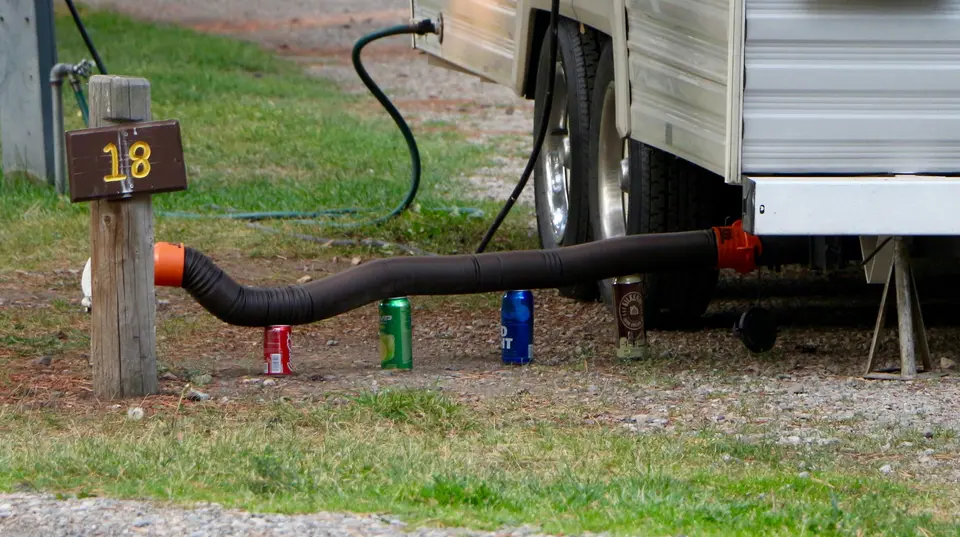
How to Dump Your Tanks: Step by Step
This is the part where a lot of RVers get into trouble, so Tim laid it out clearly:
1. Make sure your dump hose is securely connected at both ends before you open anything.
2. Open the gray valve first — just a little bit — to check for leaks. If something is loose, better to find out with gray water than black.
3. Close the gray valve, then fully open the black valve and let the tank drain completely.
4. Close the black valve, then fully open the gray valves and let those drain.
5. If using a black tank flush, add water back now. A water meter helps you know exactly how many gallons you’re putting in. Aim for five to ten gallons.
6. Keep all your valves closed between dumps. Always.
Tank Myths Tim Wants You to Stop Believing
| The Myth | The Truth | Why It Matters |
| Ice cubes clean your black tank | The only benefit is the water when the ice melts — which happens in seconds | You’re not agitating anything; you’re just adding water (which is good, but you can just…add water) |
| Dawn dish soap is safe for tanks | It can dry out your valve seals over time | Dried-out seals = leaky valves = a very bad day |
| Flushable wipes are fine | They don’t break down. At all. Ever. | Tim’s most-seen tank problem, and the hardest to fix |
| The built-in black tank flush cleans the whole tank | Most only reach part of the tank | An RV tech once called it a “black tank fill system” |
| Keeping the gray valve open is fine | Waste dries on tank walls, sensors stop working, sludge builds up | Close all valves between dumps, always, unless you really like solving problems |
Full-Timers vs. Weekend Warriors: Know Your Schedule
Tank care is not one-size-fits-all. Here’s what Tim recommends based on how you travel:
• Full-timers: Professional cleaning every 6–9 months. Freshwater system sanitized 2–3 times per year. Use the Valterra Flush King every third dump.
• Weekend warriors: Professional cleaning every 12–18 months. Still worth using the black tank flush system when you have time at the dump station.
• Buying used? Get your tanks professionally cleaned before you use them. Start at zero. Trust me on this one.
The One Tool Tim Says Every RVer Should Own
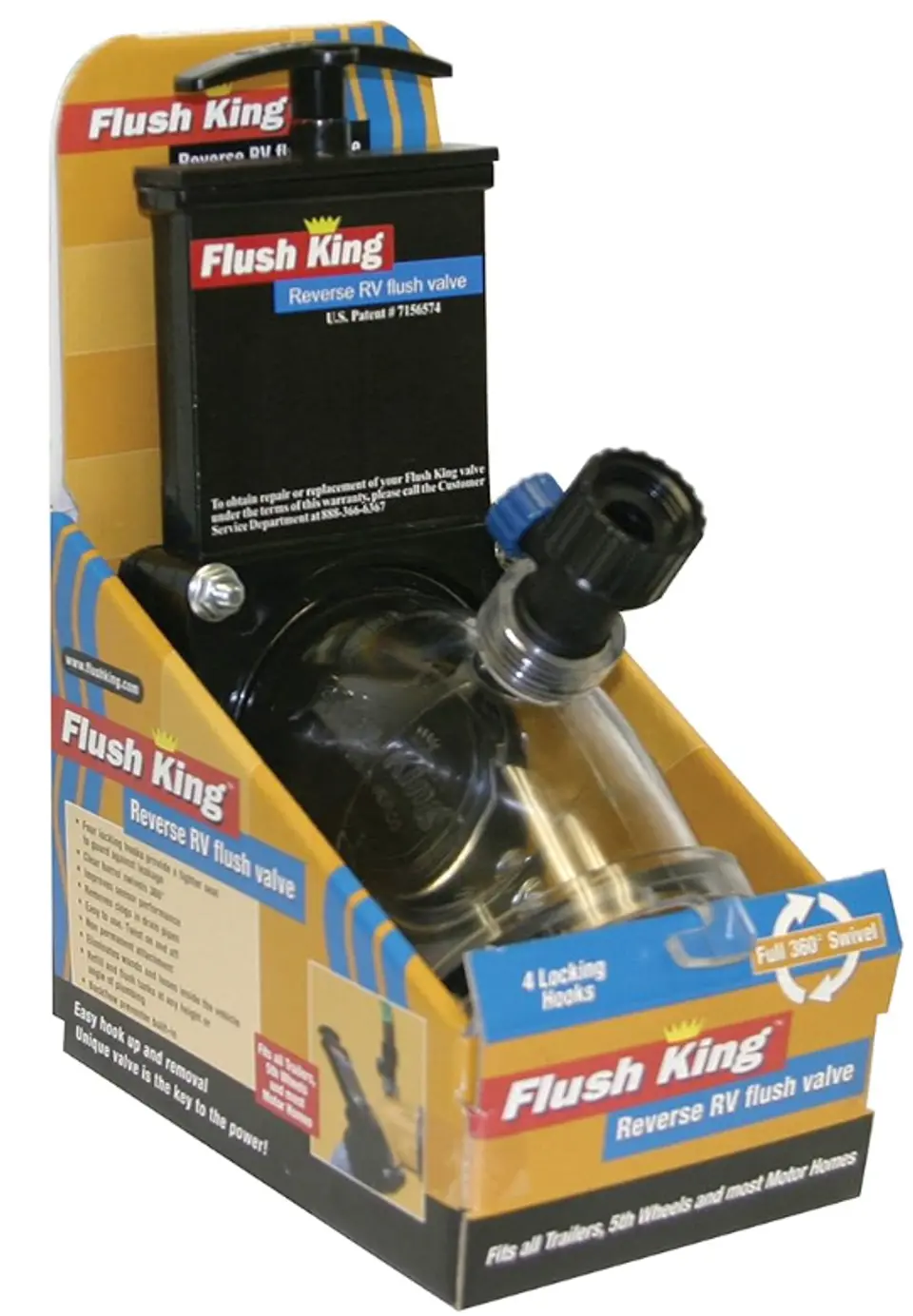
The Valterra Flush King. It runs less than $50 on Amazon and pairs with a water meter. It sits right in the middle of tank maintenance between your standard black tank flush and a professional hydro-jet cleaning. Tim uses one every third dump cycle on his own rig. He says it’s the best middle-ground maintenance tool on the market right now.
What Actually Makes a Professional Cleaning Different
Tim’s team hydro-jets the tanks — high-pressure water directed precisely inside the tank to break up baked-on sludge, scrape the walls, and clean off the sensors. Regular flushing can maintain a clean tank, but once sludge has built up and hardened, there’s no consumer tool that gets it out. That’s when you need the pros. And yes, the camera inspection story (with the, uh, unexpected discovery in the corner of the tank) is in the episode. You’re welcome.
Ready to Dive Deeper?
If this episode scared you a little, you don’t have to be. Now you know what to do about it. Here’s where to go from here:
• Reach Tim directly at primetankpros.com or call his personal cell: 308-227-9506. He picks up.
• New to RVing and want the full picture? Start at learntorv.com/rv-basics for the foundational stuff that makes everything else make sense.
• Prime Tank Pros is also a sponsor of the 2026 Learn To RV Summer Scavenger Hunt — dropping in July with a Great American theme, weekly prize resets, and an anybody-can-win format. Keep an eye out.
Where to Listen and How to Connect
You can catch this episode on Spotify, Apple Podcasts, iHeartRadio, YouTube, and everywhere else podcasts are streamed.
Join our free Learn To RV: The Community on Facebook, follow @LearnToRV on Instagram, and explore more RV resources at learntorv.com.
Got a tank horror story or a fix that actually saved the day? Email us at learntorv@gmail.com. If your story gets read on air during Campfire Confessions, we’ll send you a sticker.
And if you’re ready to go deeper into the community, the Campfire Crew is waiting for you on Patreon. Three membership tiers, early access, and the first seven days are free. Or if you just want to show some love, drop us a tip at Buy Me a Coffee. ☕
Your Tanks Are Not the Enemy
I used to dread even thinking about the tanks. Now it’s just part of the deal — the thing that makes this lifestyle possible is also the thing that requires a little care and attention. And as Tim puts it: don’t be afraid. It’s just part of the process.
Listen to this one before something goes wrong — not after. Share it with a new RVer. The one who just bought their rig and has no idea what a pyramid is. Trust me. They will thank you.
Subscribe, share learntorvthepodcast.com, and leave a review. The road is better when we travel together.
This Episode Is Sponsored by RV Roofing Solutions
Before you hit the road, make sure your roof is ready for whatever adventure throws at it. RV Roofing Solutions has the expertise to keep your rig’s roof sealed and protected so you can keep rolling. Check them out at rvroofingsolutions.com.
Some links in this post may be affiliate links. If you purchase through them, Learn To RV may earn a small commission at no additional cost to you. We only recommend products and resources we genuinely believe in.
By day, Tasha Martin wears the title of copywriter extraordinaire, crafting compelling stories and sharp, strategic messaging. But when night falls, she steps into her second superpower—podcast queen. With a natural gift for conversation and a voice that draws listeners in, Tasha brings energy, curiosity, and heart to every episode she helps create.
When she’s not writing or podcasting, you’ll find Tasha out exploring. She loves traveling with her family and seeking out unique outings, hidden gems, and memorable experiences on the road. Whether it’s a quirky roadside stop, a scenic trail, or a new town to wander through, Tasha brings the same sense of adventure to her travels that she brings to her creative work.
A storyteller, a traveler, and a connector—Tasha is the kind of voice every RV community needs.