YouTube

 Apple Podcasts

 Spotify

 Podchaser

 Podcast Addict

 Deezer

 PlayerFM
Chiropractor, Homeopath & Full-Time RVer: Health on the Road & Raising Kids in 49 States with Dr. Kristi Corder | Community Spotlight

Send us Fan Mail Sponsored by RV Roofing Solutions TLDL: She traded a chiropractic practice for a portable table so she could roadschool 3 kids across 49 states and discovered a whole new career along the way. Meet Dr. Kristi Corder. She did all that from an RV with her husband Brent. Nearly 8 years later, she still consults as a homeopath nationwide and adjusts spines across Texas. And she's launching her twins into adulthood after a childhood on the move. Jen sat down with Kristi to talk ab...
Sponsored by RV Roofing Solutions
TLDL: She traded a chiropractic practice for a portable table so she could roadschool 3 kids across 49 states and discovered a whole new career along the way. Meet Dr. Kristi Corder. She did all that from an RV with her husband Brent. Nearly 8 years later, she still consults as a homeopath nationwide and adjusts spines across Texas. And she's launching her twins into adulthood after a childhood on the move.
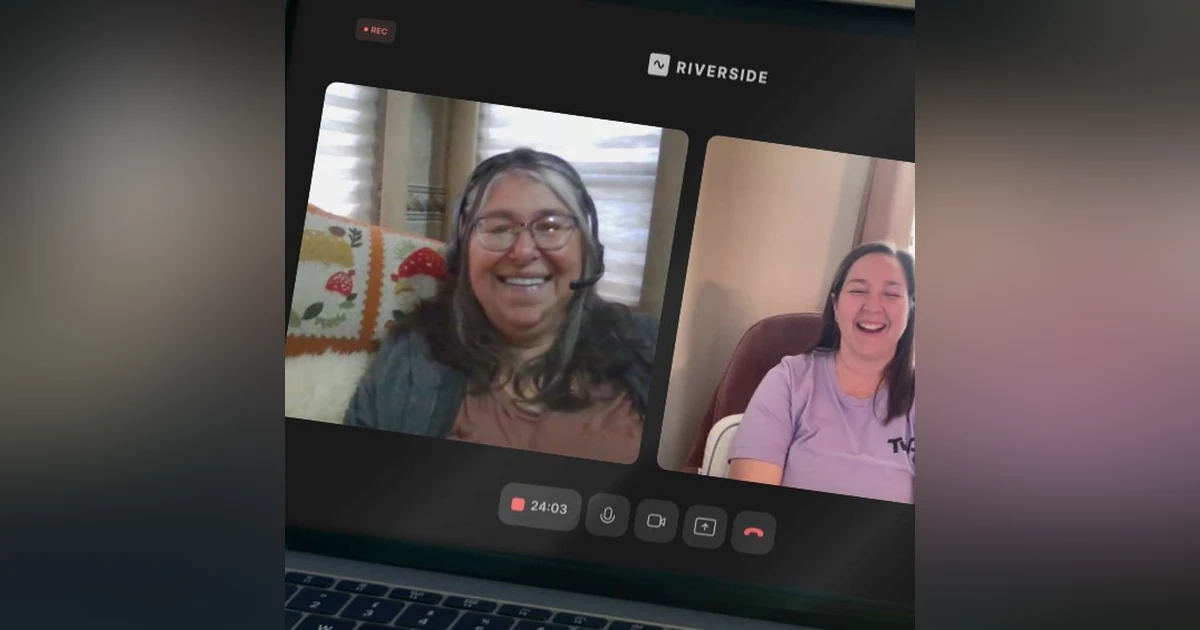
Jen sat down with Kristi to talk about the journey from no-way-no-how to full-time RVer. Kristi shares what she’s learned about wellness, posture, holistic care, and raising kids outside of a normal school year.
Learn How:
• A Disney World trip accidentally became full-time RV life
• To adapt a chiropractic practice & build a homeopathy one on the road
• To maintain posture & spinal health while working remotely
• To find chiropractic care on the road
• Homeopathy differs from home remedies
• Raising teens on the road changes how they launch into adulthood
Links & Resources:
🩺 Dr. Kristi Corder: drkristicorder.com
🚐 RV & Wellness Resources:
• Albuquerque International Balloon Fiesta
🎙️ Visit Our Podcast Website: learntorvthepodcast.com
👥 Join Our Free Facebook Community: Learn to RV: The Community
📸 Follow Our Adventures: @LearnToRV
👉 More RV Life Resources: learntorv.com
📺 Watch on YouTube: Learn To RV Channel
📛 Support the Podcast:
• Patreon (Join the Campfire Crew for bonus content, early access, exclusive episodes, + swag)
• Buy Me a Coffee (drop us a tip ☕)
💬 Managing health on the road? Share your story in our Facebook community!
✨ Subscribe, share, and leave a review. Your support helps!
Disclaimer: Dr. Kristi Corder is a licensed chiropractor and certified homeopath. The information she shares is educational and not intended to be medical advice, diagnosis, or treatment. Consult your medical provider for medical advice.
The information shared here is based on personal experience and individual choices. Learn To RV, Learn To RV: The Podcast, and all related persons do not claim to be medical professionals. Nothing discussed should be considered medical advice. Consult a qualified health care provider before making health or wellness decisions.
0:04 Hey guys, we're here with Dr. Christy Corter. Now, Christy, you and I met, I think, gosh, was it a balloon fiesta that we met at originally? Yes, we were just talking about that the other day. We went to balloon fiesta this year. We were like, oh, we met Jen, you know, outside of Balloon Fiesta at that R V park, um, at the, I think it was a casino, right? Yep, that was where my slide broke. Yes, yes, we were neighbors. Yeah, that was kind of interesting. And I didn't even know what you did was even an option for people on the road. So let's start a little bit back at that beginning. Can you just introduce yourself and then share a little about where your family's journey has taken you over the past couple of years?
0:45 Yeah. So I am married to my husband Brent, and we have three kiddos, twin girls who are now 18 and a boy who is 15. My husband and I both worked from home for years, even when we had the kids. We were homeschooling the kids, and we were just like, you know, what are we doing? Like we, you know, we had that that home life where it's like, oh, you did your work during the week, and then during the weekend you had to fix things on the house, you had to mow the lawn, you had to do all the upkeep. So we were never like really going anywhere unless it was just to see family. And so my husband started thinking, hey, you know, I've seen where people RV full time, and I was like, no way, no how.
1:30 And then we did start going with my in-laws on some camping trips. But you know, when you stay with them, where are we left? We're left on the um pull-out couch and the RV, right? Right. And it's just horrible. The RV couches are so horrible. And so my husband-in-law was like, Well, we could get our own. And I'm like, if you're gonna get an RV, we're going to Disney World. So there were goals, that's apparent. Yes, yes. He bought an RV and I booked us a trip to Disney World. Um, and it just so happened at the same time, and I I didn't mention this, I'm a chiropractor, and so I had a chiropractic conference that was going to be in Sarasota for a week.
2:15 Oh, that's a bonus. So, yes, and so I was like, okay, let's make this a three-week thing. We'll go to Sarasota first, we'll do my conference, then we'll go over to Fort Wilderness at Disney and we'll spend a week there. And then we wanted to trek over to St. Augustine and just kind of end everything with like a vacation, right? And so it was there that we went to the fort. I don't remember the name of it, the fort that is in St. Augustine. And the kids did the junior ranger program, and you know, they were exploring and they were having a really good time. And we got back home, and I was like, wow, three weeks in an RV was totally doable. And the kids loved it.
2:55 They were still learning, they were still getting an education, and we were able to have fun. And I was like, I think we could do this. I love that shift in mindset because I mean, that's really what it takes, right? Because I was one of those people that was like, I'm never gonna ever, ever, ever do this, like over my dead body and look at me out here in my 13th year of full-time travel, which is absolutely insane. So, I mean, so you were you are a chiropractor, you're you weren't were a chiropractor. So, how did that change like as you traveled? Were you still able to consult people and stuff like that? Yeah, so in chiropractic, you have to have a license in the state that you practice. Okay. So my license was Texas.
3:36 So as long as we're traveling around Texas, I am still able to see some patients here. So, you know, when we decided that we could RV full time and that we wanted to RV full time, my husband was like, hold up, hold up, hold up. Are you sure? Because I don't want you to turn around, you know, six months from now, a year from now, regret this, and then blame me for you having to, you know, get rid of your patients and sell your practice off and that kind of stuff. Um, and I was like, no, you know, I have my whole entire life to be a chiropractor. So should I want to settle back down in Texas again, I can pick up where I left off. I can I know how my I want my practice to run.
4:18 I I know the business side of it, I know how to get patients, I can do it for the rest of my life. I don't have my kids with me, you know, the rest of my life. You know, it's those those 18 years, right? So I'm on this journey of getting rid of things, moving into RV, starting, you know, traveling. I was having some health issues myself. And this was, you know, in the process of getting to full-time. And one of my patients actually said, Chrissy, part of my problem was food allergies. And it was amphylaxis. And what one of my chiropractic patients, she was like, Chrissy, you know my daughter had anaphylactic reactions, and we used a homeopath.
4:58 You should really consider seeing a homeopath. And so I was introduced to um a homeopath by the name of Jouette Calabriese, and she was totally taking homeopathy by storm because she practices a whole different way than most homeopaths do. And I became not only a student of hers, but a client of hers. My anaphylaxis is gone. Some of my other issues that I was having are gone, and I became a homeopath in the meantime. When this happened, and this was around 2017, 2018, and I started, I guess in 2019, I started consulting with clients as a homeopath, and then COVID came along, and everything was going virtual.
5:42 So I was already doing this virtual consulting and then COVID. So it was no change for me there, and that's what I have done from you know that day forward is I have switched over to consulting with people as a homeopath. Gotcha. That's really cool. So when you launched, how old were your kids? Okay, so the girls are 18, and we've been on the year on the road for almost eight years. So they had to have been around 11, like 10-ish 11. So Peyton had to have been like seven. How would you say you adapted your practice to mobile life? Because I mean, you know, when you're in Texas, you can still see people, correct?
6:25 Yes. So in Texas, I have a portable adjusting table. Oh, nice. So I have a table that folds up and latches and you know breaks down, and I can pull that out anywhere and everywhere that I want to pull it out. So with my family, you know, it goes with us. So I can pull that out, adjust them on the road, and whatever. When I'm in Texas, same thing. I can pull it out. If somebody wants to come to the house or they want me to come to them, I will go to them and take my adjust my portable table and do it that way. So I don't have a huge chiropractic practice, so to speak, at this point in time because the majority of my patients were in the DFW area and our family is around the Lubbock area.
7:11 So when we come back to Texas, we're usually in the Lubbock area for the most part. And so, you know, I've gotten contacted by a few people here who have found me on a pediatric chiropractor's website. And then, of course, I have my chiropractor that I see here who actually is referring me homeopathy clients. That's awesome. What are the most common issues that you'd say that RVers face with chiropractic care? How can they find chiropractic care where they're traveling? Yes. So places like the joint are really fabulous for finding chiropractors on the road because they're everywhere. They're a chain. Just like you'd have McDonald's or Burger King or whatever as a chain, the joint is a chain.
7:55 And so it's very easy for someone who is a member of the joint to find another joint practice that they can go into when they're in different cities. The downside of this is that it's gonna be hit or miss with your chiropractor. There's gonna be chiropractors that you love because they adjust the way that you're used to. And then there's gonna be other chiropractors who you don't drive with so well. So that's the bad part of it. Also, a lot of times I'll have RV RV families who contact me and say, hey, I'm gonna be in this area. Do you have any contacts there? So I can actually get in contact with some of my chiropractor friends that might be in those particular areas and say, Hey, you know, we travel all the time.
8:42 And there's other families that do this too, and they're regularly adjusted, but they just they're in your area and they just need to see somebody while they're there. And so I'll usually look in a couple of my um circles to see if I can find somebody who is in their area. And if if somebody were to wanted to reach out to you, is there a website they can reach out to you through? Um, they probably would need to email me in that instance or or if they're on Facebook, they can send me a messenger request through Facebook. Okay. And you know, we'll we can drop the email in the show notes at the end of this. So absolutely. You know, when we're driving, there's things we don't think about, obviously, like posture and keeping your alignment and stuff like that.
9:28 Are there any advice you give to RVers specifically that are, you know, help them on their journey, their real journey? Yeah. Yes, yeah. Posture is a big deal. And and, you know, I've struggled with that being on the road myself. As a chiropractor, I was up all day, every day. I was up on my feet, I was moving. I and and motion is life. And and that's the main thing with your spine. You've got to keep it moving. Otherwise, it starts to deteriorate or degenerate. And so, you know, obviously if you're sitting in a sitting posture, you're gonna want to make sure that your feet are flat on the floor, you're gonna want to make sure that you're upright and that your shoulders are back, um, and that your head isn't going forward.
10:11 I know a lot of us that work on the road, especially in the full-time family type community, um, we work on the road. And so we're at a computer all day, every day. And so again, when you're at a computer, you're in this posture where you're like, it's like you're you're you're pushing your head forward so you can look. For sure. So, like when I'm sitting there, like Frank has a desk out here with a stool that's like the right height, but in my room, I have the same stool, but I'm working on my bed. So I got an elevated lap desk that can go up and down so that I wasn't sitting hunched over every day because that was what I was doing for sure. I think that's true for a lot of us. Yep.
10:51 And so making sure those legs are 90 degrees when you're sitting, or you have a little stool under your feet, that helps. Even a lot of people have stand-up desks or they make themselves a stand-up desk. I know I have seen a ton of RBers who have put like a fold-down tabletop on one of their walls so that so that when they need to bring slides in or whatever, they can just fold it down and it doesn't, you know, mess the slides don't mess with it. So having a even a stand-up desk where you can be up during the day puts you in a little bit of better posture when you're working on the computer. For sure. So let's talk a little bit about holistic care, homeopathy, that sort of thing. You know, you got into that on the road.
11:32 You were already doing it when I think when I met you. But we, I mean, we've we've dabbled in that for many years, like long before we hit the road. But can you share what homeopathy is and how does it fit into your practice? I mean, because you use it in both sides of the coin, right? Right. So it's it's sometimes easier to to explain what homeopathy isn't. So a lot of people take the word homeopathy to mean things like home remedies. And so they'll think of essential oils or they're or they'll think of herbs or even nutritional supplements. None of that is homeopathy. Homeopathy is a separate and distinct form of medicine. So it is medicine and it treats people by the principle of light cures like, meaning that if if a, let's say, for example, a college student needs to stay up late at night to study for a test the next day, but they're super tired, what are they gonna do?
12:27 They're gonna go run for a glass of co or a cup of coffee, right? Because coffee's a stimulant and it's gonna, it's gonna make their brain go and it's gonna keep them uh, you know, energized for the evening while they while they do their their studying. So someone who wants to go to bed at night, but whose mind is racing and they're kind of restless and they're awake and they're stimulated can actually take a diluted form of coffee known as a homeopathically potential form of coffee, and it will actually calm their mind and calm their body so that they can go to sleep. Interesting, you know, because especially in today's day and age, I know so many families that will, you know, give their kids melatonin, and I am so against that personally, because I know that when you start taking melatonin, then your body stops making melatonin and it's a really vicious cycle, and then now you have a bunch of people that can't sleep anymore.
13:23 Homeopathy doesn't do that though, and that's one of the things that's amazing about it is you know, you're actually treating something with something. And so how do you educate clients about holistic care then? So, you know, especially my in my chiropractic practice, parents would come to me bringing their kids to me for things like ear infections, colic, those type of things. But at the same time, they're like, Well, my you know, my friends tell me that they they need to be seen by a chiropractor, but we need to get these drugs too. Or my doctor prescribed, you know, this antibiotic for their ears or whatever. So, you know, you just have to put for me, I just put those little tidbits in front of them.
14:05 So I'm like, well, you know, a lot of ear infections are actually viral, not bacterial in nature. And what is the purpose of an antibiotic? And so when you ask them those questions and you present it to them that way, they're like, oh, well, antibiotics are for bacterial infections. So if your kid has a viral infection that's causing this ear infection, then the antibiotics are of no use to them. And now we know the antibiotics mean killing bacteria. And that means the bacteria in the gut. Yeah. And so therefore, you have now just killed all their good gut bacteria along with any bad that was in there, and you didn't do anything for the ear infection because it was viral.
14:55 That's fascinating that you say that. So we were going to Hershey, and I got so sick. I totally had my first ever experience with a dizzy spell that just wouldn't go away. The first day I threw up, the second day I threw up, and by that point we were setting up for Hershey. And I finally said to my husband, I said, You're gonna have to take me to the ER. And the ER gave me some medicine, did the test, said, No, it's not anything serious, and sent me on my way. And I didn't take the medicine because the medicine they gave me didn't make me feel better, it just made me sleepier, and it wasn't really it wasn't a bacterial, it was just something to keep me from getting dizzy. Yeah, but it wasn't working. It's funny that you say it was viral because that could have been an inner ear virus, because on Friday during Hershey, all of a sudden everything lifted and everything cleared.
15:42 And the only thing I was doing was taking Manuka honey on a regular. That's the only thing I was doing during that four days while it was so bad. So I did stop spinning enough by Monday that I could go to the event, but you know, it was it was a rough few days. Yes, yes. I do not recommend doing, you know, a big RV show with, you know, that sort of thing going on in your life. Yeah, absolutely. What would you say how your journey has evolved as your kids have grown up on the road? You've got kids that are are graduated now, right? Yes. The two we have just set the two up in a house. And when we go back out at the beginning of this next year, um, they won't be going with us.
16:25 Oh wow, that's gonna be a big transition. From three down to one. I thought going from five to three was hard this year. So I understand. Yeah. So I mean, like, as far as that goes, I mean, like, what are are they doing school at then the girls? The girls are getting jobs. They have decided that, well, neither one of them has decided that anything that they want to do requires a college education. It's gonna be more training. So, for example, one of them wants to continue traveling, not in an RV. She wants to be a flight attendant. Oh, nice. And so there is no college that she needs to go to to become a flight attendant.
17:07 So she is just going to, you know, wait for that magic day that she gets the call that she has an interview to be a flight attendant and then do the training for that. So in the meantime, she's just doing some jobs here around town to help her live on, you know, get some money and live on. And the other is not quite sure exactly what she wants to do. She is a book lover, like will have her head in the book all the time and would love to do something with a Barnes and Noble, maybe even move up the chain in Barnes and Noble, or perhaps a coffee shop here in town that is book focused. It's a coffee shop. She would love to be, um, you know, love to work for them.
17:50 So at this point in time, I don't see any reason why she needs to have a college education right now. But if she so chooses something later, she can always go at that point in time. I have one graduate still traveling with us. So our oldest is nine, she just turned 19 and she's still decided to stay with us. Um, I'm trying to talk her into if she wanted to do like a seasonal gig somewhere that might be a good test run. Um, you know, because you can you can go up to Alaska and spend the summer or like we spent the summer in Yellowstone, they had dorms there as well as, you know, RV pads, and so she could meet some kids there and have that experience. So we're looking at next summer for that at this point because she wants to go to Florida and see friends.
18:33 So that's in the cards this year. And that's the good thing about RV life is you can you can make it a point to go meet meet up with those friends. Right. And it's important it's important that you do that. You know, when we got here early this year, we decided we were going to Europe. And so we did a three-month stint in Europe traveling around there. So it was all of us, plus my mom went with us. And then when we came back, then the girls were, you know, we were getting them settled down. In the meantime, we were switching RVs because our RV was just tired after eight years and 49 states and two, you know, two additional countries. Like it was tired. So we got a new RV about a week before Balloon Fiesta, and my son was like, we need to go to Balloon Fiesta.
19:19 So it's like, okay, he he wants to do that. So let's make it happen. Um, so it's like if they want to go see somebody or they want to go do something specific, it's important to let them make some of those decisions. When they're older for sure. Well, yeah, and and you know, you have to be intentional as parents, especially on the road with teens. I think that that is so important. You mentioned you went to Europe. Were you able to work from the road when you were in Europe as well? I did. I had to finagle my schedule a bit because of the time changes, and I had to see people a little less often than I would have if we were here.
20:02 But we've made it happen. Yeah, so you know, I just I I work from the road part-time anyways, and so does my husband. We do Tuesday, Wednesday, Thursday, and then we have Friday, Saturday, Sunday, that's a nice schedule. Ah, so I was able to kind of keep that schedule while we were in Europe and then still be able to do things with the kids because after all, this trip was actually my girls' senior trip. Yeah, yeah, for sure. What do you think if you if you had one piece of advice to give to RVers about wellness and health on the road, what would you say to them? Oh my gosh. Um, get out in the sun, get exercise, which I know RVers tend to love to hike, do it.
20:45 That or just even walking. Um, and my my real big thing is you can get in a really bad habit of eating out because you're in all these new places and you want to try their amazing food. You want to try their amazing ice cream and you know, all the goodies. When you're living a full-time RB lifestyle, you need to make it just like you're living at home. Like make your meals, get your good foods, keep those on hand, do as little eating out as possible because that's one of the main things that's gonna ruin your health. Interesting. Yeah, we've had to dial it in some this year because my oldest daughter, it was funny.
21:29 So in 2002 2022, we went to Yellowstone. She was getting sick on everything. Like we tried everything. So a year and a half ago, her girlfriend said to her, you know, maybe you're celiac. We cut out gluten right away, and right away we saw a change. We didn't realize that it could be that bad. And so we're very careful. And this week we're visiting family who's less than very careful. I just recently wrote a blog post about how important it is to be mindful of all those things. And you just don't know unless you know, right? You but yeah, you know, it's it's One of those things that learning is part of that. So eating at home, being in an area where we can make sure that the food is not just safe for her, but better for all of us is very important on the road.
22:10 Because I mean we're very bad about going out, especially travel days, right? Because I mean it's so much easier to grab something, but you're never grabbing something good because the truck doesn't fit with the camper wherever the good food is, right? So we try to save that for like experienced dinners where we're actually going out to dinner at a local restaurant that's private and that sort of thing. And we've done our homework on it. So you said to connect with you, just an email is a good way to connect you with you if people have further questions. Yep. Email is a great way to contact me. I do have a website, it's drchyquarter.com. You have to put the www in front of there, or it does not get you to the right place. So that's just for general information, whether that's about me, homeopathy, chiropractic, whatever.
22:52 Um, but if you need to contact me, the email is a great way to do so. Awesome. Thanks, Christy, for taking the time today. I so appreciate you.