YouTube
 Apple Podcasts
 Spotify
 Podchaser
 Podcast Addict
 Deezer
 PlayerFM
 From Grants Pass to the Open Road: The Henderson’s Line-Up Story

Send us Fan Mail Beyond the Brand Is Sponsored by Henderson’s Line-Up Three generations. One family. Sixty-five years of keeping motorhomes on the road — and doing it right. In this episode of Learn To RV: Beyond the Brand, Jennifer sits down with Tommy Henderson, the newest generation to take the helm at Henderson’s Line-Up in Grants Pass, Oregon. From his grandfather’s 1961 alignment shop to a nationally recognized suspension and chassis performance brand, Tommy shares what it really means ...
Beyond the Brand Is Sponsored by Henderson’s Line-Up
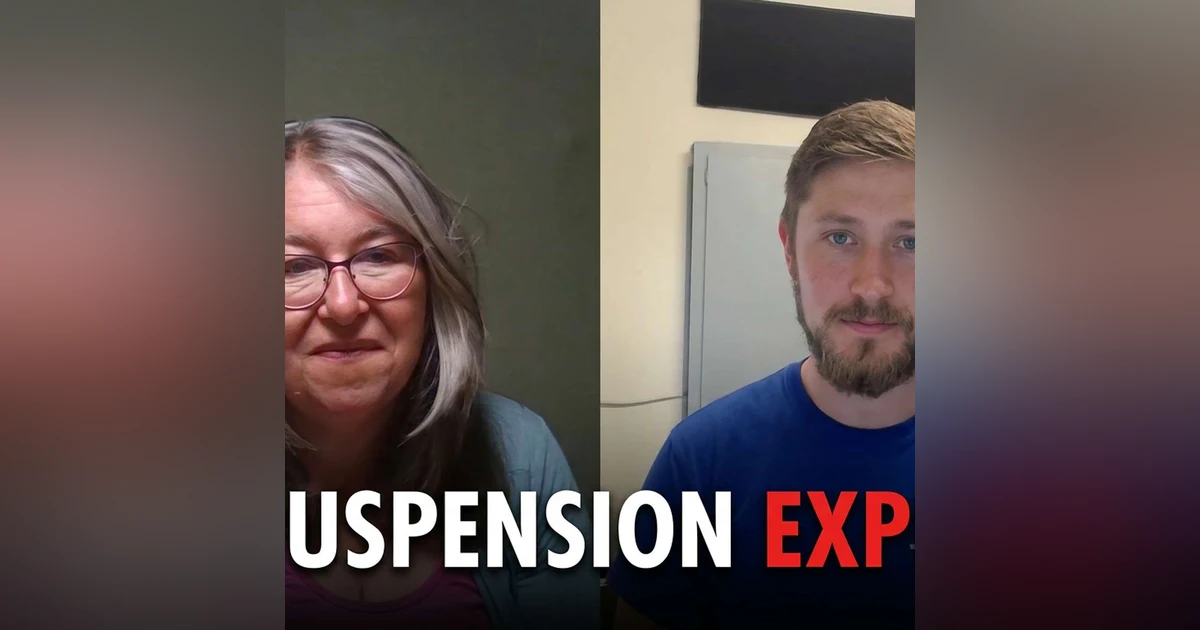
Three generations. One family. Sixty-five years of keeping motorhomes on the road — and doing it right. In this episode of Learn To RV: Beyond the Brand, Jennifer sits down with Tommy Henderson, the newest generation to take the helm at Henderson’s Line-Up in Grants Pass, Oregon. From his grandfather’s 1961 alignment shop to a nationally recognized suspension and chassis performance brand, Tommy shares what it really means to build a business on integrity, faith, and a deep commitment to the RVing community.
Learn About:
• How a small-town Oregon shop became a destination for RVers traveling from across the country
• What a Road Performance Assessment actually involves & why RVers drive hundreds of miles to get one
• Why alignment is about more than just toe & what most shops miss
• How overloading your rig affects your tires, safety, & liability on the road
• The SuperSteer brand — what it is, how it started, & how to order parts even if you can’t make it to Oregon
Links & Resources:
🔧 Henderson’s Line-Up: hendersonslineup.com
📧 Service: service@hendersonslineup.com • 📞 541-479-2882
🛒 SuperSteer Parts: supersteerparts.com
📧 Sales: sales@supersteerparts.com • 📞 888-898-3281
📺 Henderson’s Line-Up YouTube: youtube.com/@HendersonsLine-Up
📺 SuperSteer YouTube: youtube.com/@SuperSteer
👉 More RV Life Resources: learntorv.com
👥 Join Our Free Facebook Community: Learn To RV: The Community
📸 Follow Our Adventures: @LearnToRV
📺 Watch on YouTube: Learn To RV Channel
🎙️ Podcast Website: learntorvthepodcast.com
💛 Support the Podcast:
Patreon (Join the Campfire Crew for bonus and exclusive content, early access, + swag)
Buy Me a Coffee (drop us a tip ☕)
💬 Does your motorhome have a suspension story? Share it in our Facebook community.
✨ Subscribe so you never miss a Beyond the Brand drop on Wednesdays at learntorvthepodcast.com!
All right. So today we're back at Beyond the Brand. Welcome to Learn to RV the podcast. So this week is really neat because I've actually known the family of this company for quite some time. And so I want to introduce you to Tommy Henderson of Henderson's lineup. So Tommy, say hello to our audience.
SPEAKER_00Hello.
SPEAKER_01So, you know, Tommy and his company, it's it's very neat because you don't find a lot of businesses that are doing what they're doing. So number one, they're suspensions. And so they're mostly motorhome suspensions, but they're if you go to Oregon, they'll do it all. But you may have seen them at a rally, and a lot of times they do inspections on chassis while you're at the rally, so you know what's going on. But what makes them so different is they are a multi-generational family business. And so let's take it back to that, Tommy. You know, did you always see yourself as the new owner of the company?
SPEAKER_00Oh man. I would say it was a journey that got me to a place of being ready to do that. I know my my dad had uh really that that was his his dream for probably my whole life. You know, the business really was and still is, I think his pride and joy. You know, my grandpa started in 1961, and that that there's a story there too, but my dad really is the one who uh grew it to what it is today, turning in the 80s and going beyond just a repair shop. And so I think uh yeah, just it once I got to the point of seeing the amazing opportunity that is, the the opportunity to, you know, less employees and also people uh in the the motorhome community. Um that's really what got me to that point of being ready to do that, ready to take that step. And it was a process too, you know. I didn't just uh step right into the position of running the company. I I came back to work here in uh November of 2021 after worked for six years at uh Cummins Diesel Engine Company did uh application engineering there right out of college. Um so I did get a degree in mechanical engineering and uh yeah, I just was ready for a change training for getting out of the big corporate environment and into something a little more dynamic. And uh yeah, so over about a four-year period, it was November 21 when I came back, and uh January of 2025 last year when I did officially take over and just kind of gradually stuff to that.
SPEAKER_01Awesome. You know, I I think as you know, a parent that has a business, it feels like you're doing it all because you want your kids to take over. And when that doesn't happen, it definitely, I don't know, I it makes you reevaluate why you did what you did because you felt like you were doing it all for your family. Um, but at the same time, I also understand the other side of it is that kids want to do their own thing. Let's take it back to kind of your grandpa because you know, beyond the brand takes us like all the way back. So, how did Henderson's lineup get started? Do you remember as a kid going to the shop?
SPEAKER_00Oh, yeah. Yep. I remember coming into the office and uh going out in the shop. I remember uh it's funny, the little things like the water cooler and the with uh those little comb paper cups as a kid. My dad gave me a drink of water from that. Um, and uh, you know, in high school I worked cleaning up the shop. That was one of my first jobs after school and gradually worked into doing more of the wrenching and hands-on stuff from there. But yeah, definitely grew up really in this building and in this company.
SPEAKER_01Let's talk about the location because it's such a neat location, but obviously not everybody's gonna be in Oregon. So, you know, you know, you guys have always lived in Oregon, correct?
SPEAKER_00Yeah, our our business, well, yeah. So my dad, I guess depending on how far back you want to go, he was born in Fort Bragg, California.
SPEAKER_01Oh, okay.
SPEAKER_00And uh that was where my grandpa and grandma Henderson moved after the war. So they're both from Nebraska. They moved to Fort Bragg. Um, and uh he was born there in 55, and he heard of an opportunity up here in Grants Pass and uh took that opportunity to buy a shop that was called the lineup in 1961. So June of this year actually is gonna be our 65th year, so we're we're excited for that. Yeah, where it was starting was more uh cars, pickups, some of the logging crummies, which was like the pickup trucks, the logging crews would run up in the mountains. Interstate five was just getting put in at that point. At that time, it actually had a 70 mile per hour speed limit. Wow, yeah, so yeah, we've actually moved down a little bit from there. Um, but uh they weren't balancing the brake drums on the car. My dad tells the story all the time. So there were vibration issues all the time. People run higher speeds back in the 60s, and uh we were located up on the north end of town, not not far off the freeway. So it was really a great position to start getting into that, learning about wheel balance and uh alignment and all that. So yeah, been in Grand Cast since 1961.
SPEAKER_01That's crazy. So, you know, we're a military family, so I I feel like we moved every three years from the time I got married to my husband, and now we're full-time RVers for the last 13 years. So we're never anywhere more than a month, usually. Like a month is a long time, but uh, you know, so it's it's neat to see like how businesses thrive that are stationary, that are doing that type of business. And you have people come to you from all over the country.
SPEAKER_00Yeah, it's pretty cool. People will come from Florida, meet them at a rally out on the East Coast, and they'll make their way out to Grants Pass. It's yeah, very rewarding to hear those stories. And I mean, Grants Pass is a pretty neat area. I'd say too much. It is. It's probably one of the main industries around here. So, you know, we're hour from the Redwoods, hour and a half from the coast, couple hour drive to Crater Lake, and uh just beautiful area. It's still my favorite part of the country. I went to school in Ohio to college in Ohio. That was a big change. It really made me appreciate living here, just uh used to being surrounded by mountains all around. So going to a place that was more flat. Well, it's you know, it Midwest has its own beauty. I definitely missed Transpass and Oregon and decided to come back here.
SPEAKER_01Yeah, well, there is nothing quite like the Pacific Northwest. Um, you know, you guys uh your strengths are are very different than a lot of other companies. You know, I I know your dad specifically puts faith first. Would you say that that's part of it for you as well?
SPEAKER_00Absolutely. I mean, uh he would say that uh it was really God who uh sustained his business through the financial crisis of 08, 09. That was a really, really rough patch. And uh, you know, he he sought to run the business for God, and I do too. I just I look at it as uh you know, God has blessed me with this opportunity, and I'm not gonna take that for granted. And um, that really informs what we do just in terms of uh um one, just you know, whatever you do, do it for the glory of God. So for me, that means uh doing things the right way and doing it the best that we can. And uh part of that too, uh just uh treating other people the way that we want to be treated. Um just in practical aspects. I I never want somebody to feel like we're pressuring them into buying something or telling them something that's not true. I I would much rather lose a sale than lose our integrity.
SPEAKER_01We're very much alike in that way, you know. And most people are probably like they are with us, you know. My RV drives fine, you know. So how do you how do you come back and and have those conversations when somebody says, you know, well, no, everything's fine. It feels good, and then they you you then you get out there and you're like, how is it driving fine?
SPEAKER_00Well, yeah, it's funny. There's different different people have different views on what fine is. So I think a lot of times it's just educating them of, you know, if if you could make it drive better, would you like to do that? And what steps would you like to take? What aspects of the way the coach drives would you like to improve upon? And it really depends on the chassis where generally these motorhomes are not, I would say, unsafe to drive in normal conditions. There are some exceptions to that. Some of the F-53 motorhomes, uh, before they went to the bigger sway bars, I would say the the amount of sway and body roll you get from those was kind of borderline unsafe. Um the old P32 chest, the amount of sway as well as steering play you could have in them, that is arguably unsafe as well. But generally they don't they don't drive horrible, but when you run into wind, like on a really narrow road say construction zone, you're trying to, you know, you're taking up that whole range, you're kind of trying to thread the needle there. So if it could be less fatiguing to you to do that, would you like to to take steps to improve that? So that's uh one way they look at it. And yeah, it's funny, just on that point, too. Uh a lot of people say, like, I don't really need the sway bar, uh, I don't I don't need a better shock. All all you need to do is get the coach aligned. And I find that funny to use the term need because it's like, well, what do you need a motorhopper? Uh most for most people the answer is no, this is something choosing to uh enjoy and use for locations or maybe they're full-timing and seeing the country. So you know it's already something that you're looking for something to do in it. And if you could make your travel time in that motorhome less fatiguing, more enjoyable, then I think for most people may say it's worth it.
SPEAKER_01Let's talk about alignment. So, how important is alignment on the road? I mean, like uh we drive a dually and we know it's important, but like if you were just talking to somebody that's brand new to RVing, or maybe somebody that's been around for a couple years, what's the differences in like a standard OEM type alignment slash with a standard system and maybe your system? Because your system is superior than a lot of the OEM components that are out there.
SPEAKER_00So, yeah, so alignment uh our components for the most part don't directly affect alignment. I would say the exception to that would be like on the P30, P32 chassis, where that is a critical alignment component, and ours is more precision, so it lets it maintain its alignment. In general, what what separates a good alignment from a not so good alignment? Well, for one thing, a lot of times these chassis, maybe their their alignment is set from the chassis manufacturer, and then when the coach is put on it, that alignment is not checked, reset again. So, what does that mean? Well, under load, especially with uh an independent front suspension coach, picture your your wheels going like this as the front end sags, right? So that alignment can change under load, and not to mention everybody's loading the way they load the coach, even after they receive it, is gonna vary. So it's a good idea, especially with an independent front suspension coach, to actually get the alignment checked uh after you take possession of it and have it fully loaded.
SPEAKER_01Oh, that's a smart idea.
SPEAKER_00Yeah, and then getting the coach weight at the same time. We always encourage people to get the coach blade, so main it the way it's normally loaded going down the road. Um otherwise, alignment. I mean, a lot of shops, it's just like uh green is good, just get in the green zone. And uh two, they they may only be looking at toe. So toe in is like if you're looking down from above, toe in is like your fucking your tires are together, toe out is like this. So while that is a critical factor of alignment, it's not the only factor considered. So there's uh camber, so that's more like your vertical, the way your your wheels are, you know. Uh positive camber is the tops of the wheels further apart, negative camber as they're closer together, and then a lot of tops may not really pay too much attention, especially from the salt front action setting that. Then uh caster too, which it is that that's what lets your steering come back to center. That's often neglected as well. And uh a lot of times we're finding we need to run more caster just to really get that nice positive uh return to center, positive center point feel on the steering. So uh lots of different factors to alignment. Uh thrust angle too. That's the the rear axle of your coach, the drive axle. A lot of people don't think about that. That's that's part of your alignment. So if your if your rear axle is sideways going down the road, you've actually got a steer to for that front. Yeah, so then you've got your motorhome going down the road sideways. You may maybe you've been behind a semi truck or something where you may see some of that happening. That would be that uh the angle of the back axles is not perfectly centered to the length of the trailer. So lots of different factors there.
SPEAKER_01That's interesting. So you have something called a road performance assessment assessment, and a lot of people drive a long way to come get it. So can you talk a little bit about what that is and why they come to you for it?
SPEAKER_00Sure. Yeah, so the road performance assessment, this uh again, one of those things my dad really championed and developed. It's a systematic process to first test drive the coach with the customer over a route that we're very familiar with. It's about a 16-mile set of roads that we drive the coach on. And uh again, we do that with the customer. We've got trained technicians who will do that, and that's really critical. I think a lot of shops will test drive the coach, maybe a short route without the customer riding along, but really critical to have the customer there too, so that you can show the customer what you're feeling, and the customer can tell you what they're feeling when they're driving the coach. We'll go over uh rough road, highway, we'll make a sudden lane change, which that that can be pretty revealing to that. I think a little bit, a little bit surprised that people don't try to warn them. Basically, it's like if you had the swerve to avoid some degree in the road, uh we want to know or show you how your coach would handle it. Uh so that's a big part of it. So after that road test, we'll get it back in the drop, we'll weigh it on all four quarters, we'll inspect all the suspension components, and we'll actually bring you down underneath the coach too to show you what we find. So full transparency is what we're starting to cover. We'll let you see what we're focusing and just inform you of your options. Then from there, we'll give you recommendations on first any repairs, you know, anything that's obviously broken, worn out, needs to be taken care of. We'll recommend that to you. And from there, any upgrades, anything that can help the way the coach drives, help you enjoy driving it more. We'll do whatever work we want to do. And then after all that work is done, we'll drive it with you again, verify that you're happy with it and you're happy with it. Because that's that's what we're really striving to do is make sure that we're addressing real issues and actually providing tangible improvements to the customer and not you know, not just throwing parts of the problem and hoping, you know, hoping something stays.
SPEAKER_01Right. No, that's awesome. So, you know, I've known you always as Henderson's lineup until about a year ago, I think, I realized there was more to it. And so let's talk about the Super Steer line because that one is your baby. I mean, essentially. So let's talk about Super Steer Line and what that means, you know, for the RV industry.
SPEAKER_00Sure, yeah. Yeah, a lot of people uh it's funny, maybe know us by one name or the other. Like I got the Henderson track bar or whatever. And uh, so yeah, Henderson's led up is the parent company of Super Steer. We started the Super Steer brand back in 1990. Getting back to that P30, P32 motorhome chassis, it was the belt crank that the factory unit was just it's like either way too stiff or too much slop in it because of the the way the bushings were in it. And so we uh we replaced that bushing design with tapered roller bearings to get you more positive steering feel, you can adjust all the play out. So that that was our first super steer product. Since then, our super steer product line has basically evolved into our own brand of parts. So the bell cranks, uh rear chakra, front radius rods. Some uh we've actually recently partnered with Coney to do our own super steer branded version of shocks for the back of the sprinters. Super steer. Oh, that's cool. Yeah, yeah, we were really excited about that. That was kind of my first RD project uh back at uh at Henderson's lineup. Yeah, so Super Steer is our brand. It's also uh kind of what we call our store for the selling parts across the country. So if you are an RVer on the East Coast and you can't make it out to Henderson's lineup, but maybe you're a DIYer, you can buy parts from us through our SupersteerParts.com website. You can call us. My uncle John Henderson actually runs uh the Super Steer side of things, and he's got well over four years, uh probably close to 50. I don't know. And well, maybe not quite that, he's not quite that old, but um he is uh yeah. He's uh he's got a wealth of experience there, and uh he'll answer the phone and answer questions for you and uh give you recommendations for your code. So that's really what superstar is both our and and also our outside sales to the people or to shops. Uh we've got a lot of dealers, a lot of shops across the country that buy parts from us and install them. So uh really a network there as well.
SPEAKER_01And you can connect people that way, right? Yeah, that's awesome. Let's talk in going into weight limits, and a lot of people don't realize they're overloaded. And so, you know, that is a super important factor. But, you know, especially with closets and refrigerators and pantries being put in slides, you know, and sometimes that's right over the wheelbase, how does that affect your suspension? Can you speak a little bit about why weight matters in those situations?
SPEAKER_00Sure. Yeah, I mean, um the your suspension components, your brakes, your axles, all of those are designed to a certain limit. The tires are really the most critical thing that we want to look at. So, in terms of what has the greatest potential for harm to you because of overloading, tires are up there pretty high. That's probably the main thing. You want to make sure that you're not exceeding the load capacity of the tires. A lot of times the gross axle weight rating may be tied to the limitations of the tires that are spent on it, or it may not. On the back of the sprinkler 3500, for instance, the axle weight rating is uh lower than the max weight those tires could carry, to their max capacity, but uh and first though, you have to know you're running out of pressure for the weight that you're carrying as well. And each tire manufacturer will have a chart that says basically at this weight you must run at least this many pounds of pressure in your tires. So if you're not running enough air pressure in your tires for the weight you're carrying, that can overheat your tires, uh, can cause premature wear, and in this case can cause a blowout. So, in terms of overloading, that's the most immediate thing that we want to look at. Uh beyond that, uh overloading and uh you can wear out your brakes prematurely, you can wear out your bearings, assholes, uh cause your springs to sag out. If you're overloaded, your spring may be bottomed out, so you may be having more rough of a ride compared to what uh what it would have were it not you know in the proper low nick range. Uh there's also some liability aspects there too, that uh if God forbid something should happen and it turns out that your coach was overloaded, then that that can cause some exposure to you from uh yeah, just liability in that. Um so that's something to consider as well. But uh yeah, also just in terms of the way the coach handles, the more weight you're carrying, uh generally the more sway you're gonna have. Also, that the higher up that weight is. So again, my my parents have uh a uh two when a baby navigaton, and it's uh so it's 3500 chairs. So it's got one of those little beds, uh bunks over the cow, and they they've got that thing wall that's on it with uh stuff for all the rallies they're traveling to. And so that includes some foresting, but in that little bunk, they're not sleeping up there, they're just using it for storage. And you can definitely feel it in terms of sway that weight higher up, uh, raising that center of gravity, it's gonna drive differently and not not quite as good. Um I think I mentioned before weight distribution too, uh front to back, you know, in terms of stability, uh the more weight you can have, the more forward in the coach, as long as you're not exceeding the gross axle weight rating out in the front, your tires are running enough pressure. That is going to make the coach more stable as opposed to if uh the uh the loading shifted farther back, it's just gonna be more twitchy. And I I realize that uh that does uh some it's sometimes easier said than done in terms of how it's supposed to be loaded. So We actually just bought a uh twenty sixteen Forest River Forester E four fifty class C as kind of a a new project for us as a company. And uh all the compartments up front pretty pretty tiny, not a whole lot of space. But it's got a massive compartment in the very back of the coat. All that overhangs. It's like, okay, yeah, that's that's where I'm probably gonna end up putting a lot of weight, and it's not gonna help the way this thing drives. But uh a little bit of weight sometimes can help it uh ride better, though. Like let's say, you know, going from driving it completely empty to running a little bit of weight in it. Sometimes that can actually improve your ride. So that's that's also something to consider. There is kind of a sweet spot in there as well.
SPEAKER_01We've known plenty of people that put that hitch off the back of their fifth wheel and then the bounce on their bikes back there and they just end up dragging them someday. It's not right away, but you know, they don't realize. I think so many people just don't realize how much extra like bounce there is at the back of any rig. It doesn't matter. The bigger it is, the bigger the bounce really is how that works. So, you know, if you're in a 44-foot fifth wheel and you've got bike racks on the back, you know, or a generator back there that you're carrying like on a some kind of trailer, you know, the chances of that bouncing is very different than say, you know, if you have those bikes inside a toy hauler and you're carrying them inside. So, you know, you have to be mindful of all of those things. And I think so many people just don't realize what that looks like in real life for this. Um, all right. So let's talk about all your links and resources because we've got quite a few of them. Henderson's lineup.com. You guys have a full website there. How would somebody schedule their road performance assessment with you this spring and summer?
SPEAKER_00Yeah, so they can they can use the link on our website, Henderson's lineup.com, to uh request an appointment. They can also email service at Henderson's lineup.com. They can call 541-479-2882. So there's different ways of reaching us. Um and uh yeah, our our team checks all of those as well. So you can get a hold of us that way.
SPEAKER_01Awesome. And then uh Super Steer, you know, you mentioned that earlier, but let's talk about how somebody would order through Super Steer if they were wanting to get it, but maybe can't come to Oregon this summer.
SPEAKER_00Sure. So super steerparts.com. We have a uh year make model search, so you can enter your coach information there. Uh that covers the more common makes of coaches, some of the less uh less common ones we don't have in there yet. So if there's if there's ever a question, you can call us on the the Super Steer site as well, uh 888-898-3281, or email sales at super steerparts.com. Uh, we really do pride ourselves on our customer service and answering those questions. So if you're ever in doubt, just give us a call, send us an email, we'll get things cleared up for you.
SPEAKER_01Well, and I know you guys love the education side of it. So I mean, like, you know, going above and beyond the other side of it is when they call you guys, they're gonna get somebody from your home office in Oregon. They're not getting someone outside the country, correct? So that's right.
SPEAKER_00Yep, yep. We're all US based, and uh yeah, we've all got experience. Like, like I said, John, my uncle, he's uh on the phones all the time. So if you call, you'll either get him or somebody else on his team. And if there's something that the other team member doesn't have an answer for, we'll get it to John. He'll get that answered. And on the website, too, I forgot to mention we've actually got a brand new thing. Our our chassis solution center. One of our team at SuperStare, she really built this out very nice where you can actually filter to your specific model of coach and what types of issues you're trying to solve. We've got that up now for the F53, the splinter, and several other models. So you know, so we're working on expanding that as well. We've also got our learning center on there, so a lot of a lot of blog posts, helpful articles too. So we're really seeking to educate uh RVers.
SPEAKER_01Yep. And I mean, on that note, you know, you guys are going to be a part of the Learn to RV, you know, the course that we're building out. So we're very excited about that. You know, one of the things about that is having the experts in the industry be that voice. And so we believe that, you know, Henderson's lineup adds so much value to the community and the RV space. And we just thank you for that. So all right. Well, on that note, thanks, Tommy, for showing up today. We uh appreciate you and you know, where Henderson's lineup is going. What does 2026 look like for you? Do you have lots of shows and rallies that you'll be at?
SPEAKER_00We do, yeah. I mean, we've already been off to a pretty busy start coming up. We've got a couple of different Super C rallies we're going to, a few other local ones. Um, and uh we've got some some exciting projects, like I mentioned, our E450 now. So we're we're gonna have a video series going on that, which I do want to plug our YouTube channel as well. That's really an avenue for a lot of education. So we're really trying to uh put out even more educational and interesting content on our YouTube channel too.
SPEAKER_01That's awesome. We'll get that one listed on Learn to RV, our our YouTube recommended channels. And if you like any of this, all of that will be in the show notes. You'll have a way to get to every single one of those links that Tommy mentioned. Okay. So if you're a business and a brand that's out there and you're looking for a featured spotlight, this is the way to do it. Join Learn to RV beyond the brand and come on and share your story. Tommy's story is a unique one. Three generations, and it's kind of one of those things that you don't often see pass in the industry. Those family traditions and keeping them alive is a great portion of what we do, even here at Learn to RV, is we want it to stay family owned and operated. We think that there's something special about those types of businesses that aren't bought by the bigger companies that are actually actively in that space in that industry. It's kind of without limits and it's just kind of a special place for all of us. So thanks, Tommy, for coming on today. And uh we'll see you next time around the campfire.