YouTube
 Apple Podcasts
 Spotify
 Podchaser
 Podcast Addict
 Deezer
 PlayerFM
 Don’t Get Caught in the Storm: What RV Weather Enterprises Knows That Your App Doesn’t
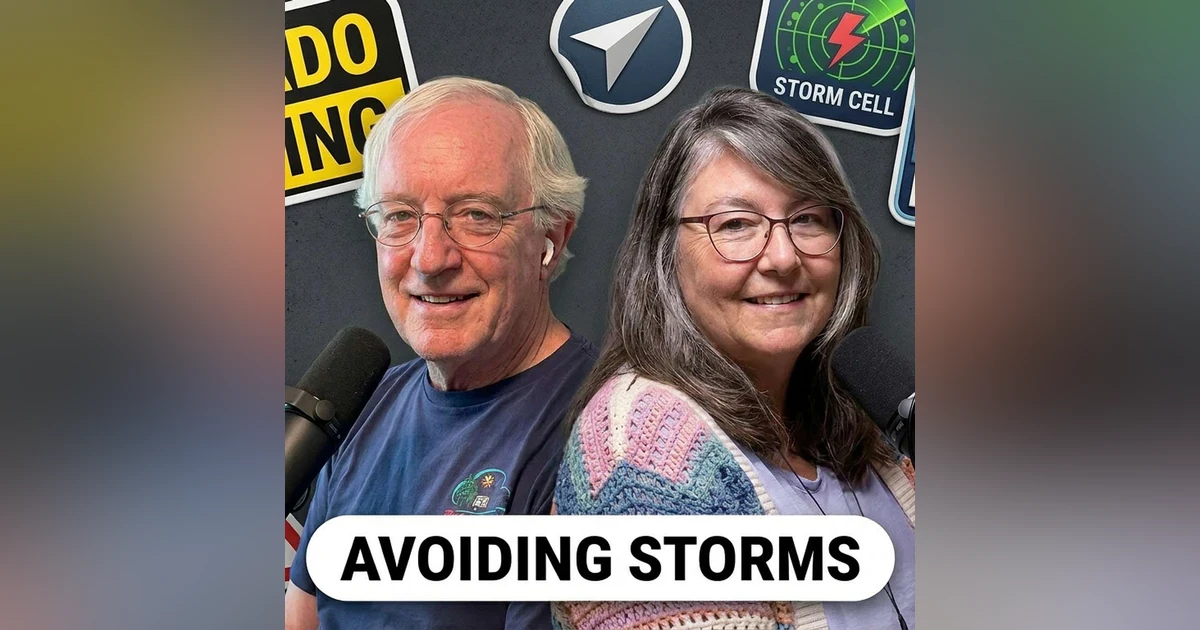
Send us Fan Mail Beyond the Brand Is Sponsored by RV Weather Most RVers check the weather. Few actually understand it. Even fewer still know there’s a tool built specifically to route them around it. Jennifer visits with David Titley, retired U.S. Navy Admiral and founder of RV Weather Enterprises, to reveal the critical gaps your standard weather app is leaving open and what happens when 50 years of military meteorology moves into an Airstream. Learn How: • ...
Beyond the Brand Is Sponsored by RV Weather
Most RVers check the weather. Few actually understand it. Even fewer still know there’s a tool built specifically to route them around it. Jennifer visits with David Titley, retired U.S. Navy Admiral and founder of RV Weather Enterprises, to reveal the critical gaps your standard weather app is leaving open and what happens when 50 years of military meteorology moves into an Airstream.
Learn How:
• Crosswinds, haboobs, and severe weather demand more than a phone app
• The U.S. Navy’s ship-routing strategy became the backbone of RV Weather’s SureRoute feature
• To set weather limits before you leave instead of reacting on the road
• RV height clearance factors into your weather routing
• Free tools are available right now at RVWeather.com with no subscription
Links & Resources:
🌦️ RV Weather – Drive Smarter. Travel Safer.: rvweather.com
USE DISCOUNT CODE: LTRV25
📧 Contact: info@rvweather.com
👍 RV Weather on Facebook: facebook.com/RVWeather
👉 More RV Life Resources: learntorv.com
👥 Join Our Free Facebook Community: Learn To RV: The Community
📸 Follow Our Adventures: @LearnToRV
📺 Watch on YouTube: Learn To RV Channel
🎙️ Podcast Website: learntorvthepodcast.com
💛 Support the Podcast:
Patreon (Join the Campfire Crew for bonus and exclusive content, early access, + swag)
Buy Me a Coffee (drop us a tip ☕)
💬 Got a weather story from the road? Share it in our Facebook community.
✨ Subscribe so you never miss a Beyond the Brand drop on Wednesdays at learntorvthepodcast.com!
You're back at Beyond the Brand with Learn to RV. How many of you guys have been in a storm on travel day? Rain's coming sideways and everything is falling apart. So you pull over to the side of the road and you check your weather app and there's not supposed to be any rain there. Well, today we're joined by David Titley, the founder of RV Weather, and he's gonna take us through all sorts of things about weather. But Dave is not just a weather guy. I mean, you were actually the Admiral of the United States Navy at one point, like doing weather for the whole country, correct?
SPEAKER_00Well, thanks, Jennifer. Thanks for having me on. I was the oceanographer and navigator of the Navy. So what that means in plain English is I was responsible for the United States Navy's weather and ocean prediction programs. And that included things like keeping aircraft carriers and typhoons apart from each other.
SPEAKER_01Wow. I mean, that's that's really awesome. You know, and I I you're such a humble guy. So I mean, like it was so funny when I learned that, you know, Frankie actually came back and said, Did you know he was an admiral? My husband's a retired Marine. So that meant a lot to him because he was on some of those aircraft carriers. But, you know, weather is always a threat to an RV. And so many people don't even think about it, or they think about it when they're in it. The other thing that you do is your travel timeline is included in that. And we're gonna get into that. You run a mobile RV service business like we do, weather is the difference between whether or not our teams are working, and so we use RV weather. But it did change how we operated. It's built for people that are actually on the road. Commuters can use it, but it's not just for commuters that are going back and forth to work every day. So if you're headed to a campground, this is a great way to get into it. So today, let's get into RV weather.
SPEAKER_00Now, are you still in an airstream? So we do have an airstream. Uh today we're at We're at home. We did the snowbird thing this year for the very first time. And uh I can tell you probably better over a beer, uh, what it's like to hitch up and start driving in plus six degree temperatures. Uh we took a chase vehicle down with us, and my my wife says the very last of the snow came off the airstream at the South Carolina border. Uh we spent in central Pennsylvania. We spent the last half of the winter and early spring in Georgia, but we're back in central Pennsylvania now.
SPEAKER_01Now are you up there for the whole summer?
SPEAKER_00We we have a couple rallies, so we'll be going to the uh big escapees rally in Maine. In June, uh we'll be going to the Airstream International Rally in North Dakota, why not? In August. Open Roads has their first rally ever. In November, we'll be going to that in Pigeon Forge, and uh and we'll see what else falls into the schedule.
SPEAKER_01That's awesome. Now, you have one of the most decorated careers in American history, probably. But you ended up building a service for RVers. So how did that happen?
SPEAKER_00Yeah, so it's it's kind of kind of interesting, and and I think a lot of people in the uh RV community can relate to this is you know, we're all sort of products of our past lives, if you will. We've you know, a lot of us either we had businesses, we were professionals, we worked in corporations, and all of us at some point kind of decided, you know, I'm gonna go do something else, and or maybe still do this in in addition to uh to to the working life there. So my background is uh kind of eluded. I did uh 32 years in the US Navy. Most of that time I was well, for the first 10 years I was on ships and and much of my time I was in the meteorology oceanography community. I knew since about kindergarten I was gonna do something with weather. If my mom was still alive, she would have told you I hatched as a as a meteorologist. I did weather for for a long time in the Navy. For a little while after the Navy is NOAA's uh chief operating officer, so actually the head of the U.S. Weather Service was one of my direct reports. Penn State then made me an offer I couldn't refuse. And uh so I ended up teaching in the Department of Meteorology and Atmospheric Sciences for uh for a few years. But like a lot of us, I got to be about 60, give or take, years old. And, you know, I was pretty convinced that uh while we're all gonna die, I did not want to die behind a desk doing a PowerPoint slide. So told my boss, you know, this has been great, but uh, you know, time to time to move on. And what we really wanted to do was actually work in Grand Teton National Park as volunteers. It's a lot easier unless you live in the area in Jackson Center, or Jackson, I'm sorry, Jackson, Wyoming. And if you can afford it, more power to you, we can't. You know, the houses started about$2 million there, and and that's for a closet. So we knew we weren't going to be buying there. But if you bring your own house with you, as in an RV, things become much, much more tractable, if you will. So that led us to the RV world. We ended up with an airstream, and I hadn't, I hadn't towed, really hadn't even camped in decades. I mean, we knew nothing. And and when I look back, I mean, we were scared. I was scared when we first started this. I should have been a lot more scared than I was. But we figured it out, right? Oh, that which doesn't kill you makes you stronger. And we we figured out. But one of the things, of course, you learn from firsthand is just how much more weather sensitive, you know, towing. So we we've got a 30-foot trailer. It's certainly not the largest on the road, but it's not the smallest. 30-foot trailer, 10,000 pounds, 10,000 pound truck. Uh, so we're 53 feet length in total, and you really start knowing, like when you're going across 80 and you have 40, 45 mile an hour crosswinds, you feel it. You know about that, and you watch the trucks. Now you're really watching the trucks because you're wider, right? And you're watching the trucks sort of crabbing down the road and wondering whose lane they're really going to use, whether it's their lane or your lane. So you just become much more sensitive. We ended up towing a little bit in the snow in Yellowstone National Park. That was an experience that I don't think can happen.
SPEAKER_01And so many people don't realize that can happen.
SPEAKER_00Yeah, up at the higher elevations where we were for a little bit. So we've sort of done a lot of these things. Of course, you know, avoiding severe weather, you know, airstreams aluminum. Aluminum and hail storms do not really mix well. Usually the hail wins, so we work pretty hard to keep ourselves away from that. So we learned one, we learned firsthand. Two, like everybody, of course, we're on social media. There's affinity groups. I'm in an airstream group. I actually ended up as uh one of the administrators for Airstream Addicts. It's about 86,000 people, give or take. And people, of course, figure out, oh, you're a weather guy at this. And then one and then two and then three people say, well, I'm going from, you know, point A to point B. Can you help me out? And as I mentioned in the Navy, one of the things we do is we have a program in the Navy called Optimum Track Ship Routing, OTSR for short. What that really means is we're going to keep ships out of bad weather. Since I can't move the storm, I move the ship, or I delay the ship, or I tell it to go somewhere around. So I really just took what we had done with the Navy, applied it to RVs. And I probably did between about the year 2020 and maybe 2022, 2023, I routed 400 RVs, not just airstreams, I mean fifth wheels, class A, vans, you name it, uh, pretty much any RV, and people would find out about this. And the price was right, it was free. I did it, but I was doing it by hand. One, this starts taking up a lot of time. And two, this is, you know, a great 1970s kind of business model in which I'm sitting there and looking at a lot of weather charts and roadmaps and this and that and putting it together. It worked. And one of the things that came out of that is I learned not only about my personal weather limits, but I learned about hundreds of people's weather limits for RVers. And there's certainly a spectrum, but you get a pretty good feel for what people are okay in, what makes them uncomfortable, and what is like just no-go, right? We had that. So I sort of had this vision of like, well, why can't we take all the weather rain, snow, thunderstorms, visibility, winds, wind gusts, and kind of put it into an impact level. And I made up a scale basically one to five, and you could, you know, made it yellow through dark red. We know that we don't want to be in bad weather. Well, what kind of bad weather? Well, I just don't want bad weather, right? Don't confuse me with the details, just keep me out of bad weather. So we were able to first build a system that would take all the different kinds of weather and basically come up with uh with what we called a performance surface, if you will. It was basically a weather impact surface, and we built that out to eight days. But then it's like, well, how can I route people to avoid the weather they don't want to be in? So you mentioned at the beginning of the show, like it's really bad weather and you pull off and you're trying to do superhuman things.
SPEAKER_01We actually had that happen. So when let me let me just pull you into that. About a year and a half ago, we were leaving Texas and there were bad storms forecasted, but we thought we could avoid them, so we left. Back then, I had a chase vehicle, so we had a minivan and the truck and trailer, and Frank drove the truck and trailer that were other with one of our kids. And so they were in it, they called me and they said, Hey, we've got some swirling trees, we're gonna keep going. We can't see in front of us, we're starting to get some hail. I knew because there were tornadoes in our path that they were probably me deep in it. Well, then I drive into it and I'm probably only a couple miles behind them. But me being me with all the kids in the van, I am in the back going, All right, let's find some place to pull off. We're on the back roads in Texas, and so I find a little tiny convenience store go up under their awning and hang tight. Their building is brick, and I feel like, okay, but then I'm watching on the app we have to track each other. He's getting further, further away, and the trees are swirling way worse around me. And so that was the day I wish I'd had RV weather. You know, you're trying to get out of the storm before it hits, whatever that looks like. Your origin story, you know, you started it just to do something. Like it wasn't like a business back then. At what point did you realize that it was a business for you?
SPEAKER_00Yeah, it's that's a that's a great question, Jennifer. And really how that transitioned was, as I said, I sort of had this vision of like, how can we do like what the Navy does, keep people out of bad weather, but how can we do it automatically? And how can we make it so that really anybody who has one of these things or a laptop or a tablet, how could they do this by themselves? Because I'm only one person. I'm 60-something years old. I am not gonna go and hire an office and 40 people to, you know, be like Bartleby the Scrivener and do this. That's a 1970s business model. We're not gonna do that. So, how can we do this? So I'm on the phone with, and I I tell when I talk to students, this is where this is my relationships count uh story here. So I'm talking to a good shipmate of mine, good friend of mine, guy named Van Gurley. I met him in the early 90s. He was a lieutenant, I was a lieutenant commander. He's probably one of the smartest guys I've ever met in my life, Navy or or not. We end up working together, or he works for me in various places. He ends up being my chief of staff and my deputy when I'm a two-star rap in the Pentagon.
SPEAKER_01Me. It's actually funny. People don't realize how tight that military community is, and the longer you stay in it, the more times you circle back with the people you started with.
SPEAKER_00Oh, yeah, yeah. And especially in, I mean, naval oceanography is pretty small to begin with. So you know everybody. It's almost like high school. Van by this point is actually, he started as an analyst. He's now become chief executive officer, CEO of a pretty significant Beltway high-tech defense firm out in, for anybody who knows North Virginia, they're based out in uh Reston, Virginia. And his firm, it's called Metron, really goes and finds 50-pound brains, applied mathematicians, software engineers, physicists, people like this. So Van and I were just having a phone call, we're just catching up. And I mentioned, you know, hey, I'm doing this RV weather thing. It's kind of a hobby. I'd love to be able to do routing. Turns out the week before Van had had a board meeting and his board had said, if we could like civilianize some of the things that we're doing, that would be pretty cool. We would expand our markets. So Van is thinking, hmm, we know how to do routing because we do routing for the Department of Defense and other agencies. I had kind of I knew what we would route around. We would route around that performance surface where we show high impact weather. We don't want to be in it, right? But that weather's moving, you're moving, weather's evolving, you're moving. How do we do all this? Well, by the way, unlike ships, we tend to stop at night, right? We don't just keep driving 24-7. That's true.
SPEAKER_01I hadn't even considered that the ships didn't stop.
SPEAKER_00Ships don't stop, ships don't have to stay on Interstate 80. So we have some other constraints in the RV world that we don't have in the maritime world, but fundamentally the problem's not all that different. But nobody has automated this. I had a pretty good idea of how to do the weather piece. I did not know how to put the routing piece onto something that would work for everybody. Metron did. So we formed a company, RV Weather Enterprises. I took RV Weather, we made it into RV Weather Enterprises, co-founded with Metron. And what we then built was what you now see if anybody goes to rvweather.com and runs SureRoute, that is what we built. So we have now taken basically the same tenets, the same concepts of what the Navy does to avoid keep ships in bad weather from each other. We now can do that for RVers. So you tell me where you're starting from, where you're going to, how many hours you like to be on the road, towing speed, your rig height. So we give you an RV safe route. But then the thing that we do that no other app does is I ask you, tell me your weather limit. Basically, tell me how much weather you're gonna be okay with. And I'm not your mother, so I'm not gonna tell you what it is, but we do default to slight. And what what I have found when I did all those routings manually, slight, there's a whole definition. But for the podcast, let's say it's basically wind gust up to but not higher than 30 miles an hour. Most RVers, it's like, yeah, we know it's windy, we know it's getting breezy out there, but most of us is like, yeah, we're we're okay with that. Not the perfect day, but it's okay. So that is the default weather, but you can set it higher. You can even set it lower. It's up to you. And then you press run, and within about uh one, two minutes or so, you are gonna get a route that will get you from your start point to your end point. It will optimize that route to get you to your end as quickly as possible within the constraints and avoid the weather that you don't want to be in. And that's how this works. So, Van's team, the Metron team, they they had again the the software engineers and they understood like how to do that. You know, I had, you know, it's like that cartoon, right? I had here's my great idea I wrote on a sticky. You guys go and do it now. Uh I understand this.
SPEAKER_01My whole team like rolls their eyes at me.
SPEAKER_00So here's a great idea, right? Um so, anyways, but that's how that's how we've uh we've done it. You know, we do some other things. We still have a daily forecast. You can find the daily forecast on our website. That's actually free to everybody. That's that's just there. But if you want the routing, we've got some ways you can try it out for a couple days. And and then, of course, you know, it's a subscription service if you if you wanted to.
SPEAKER_01Sure. And we'll get into that.
SPEAKER_00Yeah.
SPEAKER_01But so let's talk about the actual problem. Let's talk about, you know, a lot of our viewers walk around thinking that their phone's weather app is the chef's kiss. And you know, we we are the weirdos. So we actually had Frank has, I don't know, five, six weather apps installed because we also track weather for our teams across the country with our re-roofing solutions. But there's a fundamental something that every standard weather app is missing. If you were to define that one thing, what would you say is missing that you have?
SPEAKER_00Yeah. So the one real difference is well, there are two. There are two main differences. One, the first main difference is we integrate all the different kinds of weather to give you one weather impact. So you don't have to go scroll through, well, let me look at rain, let me look at winds. Is there going to be any freezing rain? Is there going to be any big thunderstorms? Is there going to be wind gusts? And a lot of the apps, and I've got them all too. I mean, I and I use them, you know, for basic weather forecasts, that's what I need.
SPEAKER_01So I mean, Frank, Frank actually looked into being a balloon pilot at one point, and I'm not sure it's not still on as radar, but the reality is, is we've we've done everything. We've chased balloons, we've done all of it. So I think we probably have every app out there. Yeah. And so on a windy day, we're going to windy.com, we're not going to, you know, weather.com. I mean, we're not going to, you know, the NOAA is the most accurate if you don't have a subscription service like ours, we find personally. But weather underground is always one of those things where you know you find different things where people are learning something totally different. And weather underground can say something totally different than I don't know, pick an app. You know, there's lots of them out there, but I feel like yours is so concise. It's that's one of the things that makes it so different. It's not just it's gonna rain at my destination, it's the entire travel day.
SPEAKER_00I mean, and and that's the thing. So we give you the travel day, but what we also do, which as best we can tell, nobody else does, is we will give you a route to keep you out of the bad weather. So this is where I tell people rather than using your incredible RV driving skills when you're in the middle of the storm to try to extricate yourself, use your incredible RV judgment to keep yourself from being in that position in the first place, right? I mean, and that's how pilots talk about this. Use your judgment so you don't have to use all those superior aviation skills there, right? Keep yourself out of getting into what we would call in extremis, right? You don't want to put yourself there. So I am not gonna route you intentionally through an area of high chance of tornadoes or hail or straight line winds from severe weather. Now, can I tell you days in advance where those storm cells are gonna be? Of course not. And nobody can. And anybody who says they can, put your hand on your wallet and and slowly back away. Because we don't, nobody has that kind of skill, whether they say so or not. But we can tell you there's a high potential. Let's, I mean, today, right now, I mean, there's a high potential, Northeast Texas, Oklahoma, up into Missouri in the afternoon that, you know, there's gonna be some significant sales. You'll probably see, you know, a tornado watch come out mid-afternoon, and then you're gonna have to start watching if you're in there. So I tell people like, if you are in there, I mean, and and do exactly what you did when you're in the chase vehicle. I don't care what building you find, find a building because that building is better than your RV. Uh-huh. Even if it's a little convenience store, you know, it can be a bathhouse, it can be a rest area on the freeway, it can be a loves, it can be a Walmart, it can be a McDonald's. I don't care. And they won't either. If there's a real storm, nobody's gonna throw you out. Just park your rig somewhere. And and if you're in that warning in what we call in the polygon, be safe for 30 minutes, 40 minutes. Worst cases, if your rig goes, that's what insurance is for. I hope not, you know. But you will be safe, right? Whereas if you're in the rig, if you're in the rig, it can be really bad.
SPEAKER_01A couple of years ago, we were actually right here where we are this week. We are in Conraer, Texas, and there's a lake literally like less than a quarter mile from my RV right now. Uh, a cell came across the water, and you there's actually pictures from that storm from several years back. It lifted my RV and we were in it as it happened, our awning. We were pulling it in. We had some inflatable kayaks that we were securing at the same time. The rain was coming sideways, but we felt to go boom. And at that point, everybody was like, let's go to the bathhouse. It was really that fast, that simple. Like you just you just grabbed your favorite pet and you left. Like, nobody cared that we were in there with our dogs, nobody cared. And we stayed in the showers, like you know, our our family. We have seven children, six still traveled with us at that point. No, five, five still five plus two is still seven. And so we're in there with our dogs, and we were all in the women's bathroom together because nobody wanted to separate at that point. Everybody else was filtering in and we were just like, come on in, come in and nobody cared. So, like there were 40 people in this bathhouse, but it was safer than our RV. And we didn't know what that storm was gonna do. And so we're here in Texas again this week during that storm cell. So hopefully we're in good shape this week. But people check the storms, nobody checks for crosswinds. Most people don't check for crosswinds. Um, and while they're white knuckling at 60 miles an hour, I remember a time um we're gonna dive into wind a little bit on the road, and I know you briefly discussed it, but we were hitting a storm cell as we were coming across Texas, and it wasn't your average storm cell. There was no rain, but it was windy, and all of a sudden there was this brown cloud coming at us. And so we did a you know an episode on weather, and I said, Yeah, we were driving into a haboob, and she was like, A what? I'm like, yeah, well, I'm like, you know, this brown wall. I said, and we lived out in southern California for a bunch of years, courtesy of the Marine Corps. And so we saw a lot of windstorms. Palm Springs doesn't get the rain, but it certainly gets the wind. And so a brownout is a very common problem. Also, that day in the chase vehicle, I lost Frank. Not because he was miles ahead of me, but because that wind wall just showed up and it was brown. So flashers on. Now we're looking for we weren't stopping right here, but now we're stopping right here because that's just smart math. And so we actually waited it out almost a day and a half. We pulled in and waited a whole day. The wind was running 40 miles sustained, which meant that the crosswinds were even worse. If the forecast says that winds are 15 miles an hour, but you're in New Mexico or West Texas, what does that look like if you're even just flat towing on a highway?
SPEAKER_00Yes, we we actually I look at gusts, uh, because the gusts are what you're gonna feel. So if you look at RV weather, it's really calibrated for wind gusts. Uh so as we kind of mentioned, if the winds are the wind gusts are less than twice. Miles an hour, you're not going to see any color on the map. Uh, if they're 20 to 30, you see light yellow, 30 to 40, you see orange, 40 to 55, it's dark orange, 55 to 75, it's red, and then after that, it's hurricane force, and it's like this really ugly, dark, purple-y color that you don't want to be in. So we calibrate for gusts. You can turn on, we've got an icon, you can turn it on, and you'll see it's very windy-like in the sense that we show kind of the flow of the wind. So it's real obvious if you're on I-10 or I-40 or you know, I-15 or 25, whether that's a crosswind or head or tail wind. And you gotta watch out for the for the dust storms. And the weather service is pretty good about putting those out. They'll put out either a dust storm warning. So I have on RV weather, if you go all the way down to the bottom on the top right, you can select NWS Alerts, National Weather Service Alerts. And if you put them on, those update every minute. They are just continuously updating. And I actually have things like snow squall warnings, severe thunderstorm warnings, tornado warnings, flash flood warnings, dust storm warnings. They will flash. They will actually flash to kind of keep get your attention, if you will. And you can just mouse over, you can click on it, or use your, you know, tap on it if you're on a phone, and you can read exactly what the Weather Service has uh put out for for that location. They're pretty good about getting those those dust storms. But and I'm sure you've you've seen these, Jennifer. I mean, if you go on I-10, I-8, I-10 out in Arizona and New Mexico, they're actually signs on the interstate. They tell you exactly what to do. And it's basically get as far off the road as you can, turn off all your lights, get your foot off the brake, basically be invisible because some idiot otherwise is gonna see your lights and think you're on the road and they're gonna, they're gonna run right into you. And you talk to any trooper out there, and they they've all got stories of, yep, they ran right into them. So yeah, but you gotta get off the road. You got to get off as far as you can. But if you're into those things, you know, the winds are up there, so you're probably, you know, on RV weather, you would see that you're probably at least orange, probably dark orange, maybe even red. So if you're using kind of my I only want slight weather, we're gonna give you a route. It's rather than like remembering what to do in the dust storm, it's like I'd prefer to keep you out of those situations to begin with. I hope that makes sense.
SPEAKER_01No, it does. And then the bridge and the overpass clearance piece, let's go back to that just for a second because RV weather factors those dimensions for your RVN to your routing. And that's not a weather feature, it's a full travel intelligence feature. So, when did that become part of your equation?
SPEAKER_00It was very early on. It was probably the very first upgrade we did after we launched the routing. It was based on customer feedback. This routing thing's nice, but I don't want you to route me around a storm just to route me under a low bridge. You can't do that. And it's like, yeah, that's a pretty good point. Basically, built in, there is, believe it or not, there is a service, there's a couple services, that that's what they do. They go and figure out in the United States of America, really North America, all the clearances for underpasses and bridges and stuff like this. And I've actually had people, when I've looked at routes, I mean, 999 routes out of a thousand run just fine. But every once in a while I'll see somebody's route doesn't run. And I've had a couple of them, and it's like they wanted to get to a certain point, and you had to get under a low bridge to get there. And they had put in my rig is 13 foot or 13.6 or whatever. And it's like, you know, that bridge is 1210. At least that's what it's measured as. Right. So I tell people, assuming that you your data is right, that you're really 13 or 13.6 or whatever, I tell people it's only a mile down from the campground. I would call the campground and double, triple, quadruple check. But that's why, that's why, you know, my system is it's trying to keep you out from being under a bridge that you you really shouldn't be going under there. So maybe you need trusted local knowledge to verify.
SPEAKER_01Yeah, we do probably two to four roofs a year that for people that have hit a bridge. And so it's it's not uncommon. And if we do two to four, there's other companies doing a lot more than that. I love that it can tell you whether or not your rear rig can safely navigate not just the weather window, but it's a totally different product category to say, okay, you can't go under this bridge because I don't know. We have a lot of tools. Frank and I use a lot of tools, you know, and and the accuracy of RV weather is different, it it just is different. And, you know, we've been using it four months now, regularly, like on a regular basis. So it's real meteorologist behind the screen. It's not just an algorithm, it's not just some kind of AI bot doing it for you. Obviously, you're an actual credentialed human being reviewing data. And so it's what lands in our inbox when we go to hit the route. So let's get into roofing a little bit because it is personal for us. Been doing RV roofing for 13 years now. Before RV weather, we were doing what everybody else did. We were tracking seven different apps, checking whatever app, hoping it was for the best. Our technicians would carry one or two apps. Frank would check the weather for all of them because they don't track the weather like he does. If we have a roof wide open and there's a rainstorm coming in, we need to know because we need to not open that roof, period. But it costs real money if we don't, if that makes sense. So for a service business or a mobile unit like RV Tech's working outdoors on whatever, is RV weather, what is it giving us that you know we weren't getting from our standard tools? I mean, I know the answer, but I'd like you to tell me.
SPEAKER_00Yeah, I'm I'm actually I'm I'm cautious on this. This is a little bit of a promise and over-deliver, perhaps. In the first 36 to 48 hours, what we do is we're still taking what they call, it's really a consensus. It's really, I'm taking up to 11 different weather models and we're putting them together. And when I say Wow, that's a lot of weather models. Yeah, it's really the National Weather Service that is doing this. There's something, this is like a put on your put on your real thick glasses here. This is weather geeky stuff, but there is something called the national blend of models. And it's really the international blend of models, but international doesn't sell as well with the Congress, so Noah calls it the national blend of models. And what this came out of was actually from Hurricane Sandy. So for people who remember back, this is 2012, Superstorm Sandy went into New Jersey. It did this famous left hook into the into the coast. And this is really the first time, I would say, in the popular culture that people even realize there is a European weather model and a US weather model, and they don't always agree. And then this one in general, the European, it called the landfall into New Jersey, and the US one didn't. So everybody's screaming up and down, you gotta, you know, do better, blah, blah, blah. NOAA after Sandy actually got some money, and what the then head of the weather service did, and I thought it was brilliant on his part, was like, we're not just gonna take the European, we're not just gonna take the US, we're gonna take all of these. And as I said, it's up to, you know, over 170 models. And we're gonna, we're gonna mix them up, okay? And we're gonna, you know, the ones that do well, we're gonna wait more than the ones that don't do quite as well. But I tell people, I I think a number of your listeners would would understand this. You know, if you've got Fidelity or Vanguard, Vanguard especially, like index investing. Yes, if we had all picked Apple and Starbucks and Microsoft 30 years ago, none of us would probably be here right now, right? Because we have our own whatever, our own country. But we didn't. How do you know? You know, well, you don't. But if you can buy this index, you'll probably do pretty well, actually, usually better than just picking individual ones. So I tell people that the national blend of models, this is the weather version of index investing. You can from time to time find a model that does better, but the blend rarely has a bad day. The other thing it does, because remember, I'm not trying to just tell you the weather, I'm trying to give you a route to keep you out of bad weather. I need not only accuracy, but you know the other thing I need? Stability, right? I cannot have a system that says, hey Jennifer, you guys need to be on I-90. And then 12 hours later, no, I meant I-70. No, I-40, no, I-80. If I was doing that, if that if if these recommendations are bouncing all around, I mean, you guys are gonna find the cancel button real fast. So it has to be right, but it also has to be something that as it updates, and it updates every hour, that you can get a stable solution, something that says, no, I mean I-90, I really mean 9-90, the bad weather's gonna stay, Nebraska's, you know, whatever. You're you're gonna be okay if you get that far north going across the country. So that's so that's what we we do. You can use this very near term. You will see, you know, if you just turn on rain, just turn on rain or turn on snow, you will see a lot of structural. I call it structured. You'll see, and it's pretty good. But I also, if I'm in your business, I'm gonna have a good radar app as well. And I'm gonna let the techs either you have a central command place or you train the techs enough so that they know what they're looking at on that radar app. I use WeatherTap. I'm not I'm not sponsored by them. I don't have any affiliate relationship with them. It's just what I've used for 10 years. It works pretty well. There are certainly other equally good radar apps out there. So, like if I'm looking at that zero to two hour kind of time frame, I'll probably look at a radar app. Uh but once I get beyond there, you know, yeah, you can look at the impacts. But again, remember, I'm RV weather is tuned for driving impacts. So in fact, I say that, you know, we're really not a weather app. We're a we're a decision application, right? We're a decision application to help you either plan your route, evaluate your route, or I'll give you a route. I'll give you a recommendation. So it's the old, there's a the cliche, right? Everybody talks about the weather, nobody does anything. We've all heard that. We're gonna do something. We're gonna actually tell you what to do to keep you out of the weather you don't want to be in.
SPEAKER_01All right, let's talk about actual mechanics of RV weather. And I know we're running long, and stick with us because this is just such great content. Honestly, you know, not everybody tracks weather the way Dave tracks weather. And this is your passion project, I would say, turned into a business. But at the same time, you know, nobody's doing it quite like you're doing it. So let's talk about weather apps. So pull somebody pulling the data from three sources, they put a nice interface on it. RV weather is not just that. So under the hood, let's talk about Wilma.
SPEAKER_00Okay. So Wilma is a term that I used to use. I actually don't like anymore. And that's okay. It it's it's it's sort of a fun term. Anyone who's made it this far through the podcast has probably figured out that I did a lot of things in my life, but entrepreneur and starting a small business until very recently was not one of them. So one of the many things I've learned, I learned stuff every day, is don't use terms that confuse your customers. And so I had this cute saying, Wilma, and it stood for weather impacts likely to make an appearance. We use it internally now within our software teams and our own marketing teams, but I I usually just call it weather impacts now because everybody understands weather impacts. But yeah, but Wilma was really that first, you know, you you can almost think of like a pyramid. So the very first layer of the pyramid, think of your think of your weather models. And this is what on most of the free apps you can find. You can either find, you know, a forecast that's coming out of some kind of weather model. Some of the apps tell you which model it is, others you don't even really, really know. It's just some sort of forecast. And some of the geekier ones let you look at, you know, a whole bunch of lines and moving stuff and whatever. That's your weather model. The next layer up is what does this mean? You know, you could almost call it this performance surface or this impact surface. That would be this so-called Wilma. This is this is where we have integrated those seven different kinds of weather and put them on this unified scale of one to five, where one is slight impacts, five is like nobody should be there, like hurricane, tornado blizzard, that kind of stuff. And we go out to eight days. And I go out to eight days really for the reasons we've talked about before, is I have a stable solution, pretty accurate, but also stable out to eight days. So you can animate this. And actually, in the very beginning of RV weather, that's all we had, was we just had these weather impacts, and you could look at that and you know where you're going, and it's like, oh, I see all these colors, let's not go there. And then the third part now is the routing piece that goes on top of this. So that routing engine will, again, as we've talked about, get you from point A to point B and avoid those colors, avoid the things that you you don't want to drive in. But yeah, Wilma was really the first instance or iteration of combining all that different weather stuff, which is usually that's what you get on the free apps. You get all the different weather stuffs, but you have to go and look at seven places and seven times and seven icons and put it together. And I'm not saying people can't do that, but it's a lot of time. You're not, you know, you're just never quite sure. So if nothing else, we save you a lot of time. And by using the national blend of models, we know we're going to be pretty good. And because that's really taking not only whatever you saw on your app of choice, but it's taking 170 other solutions as well and putting it all together.
SPEAKER_01That's fascinating. So it's so for somebody that's not a weather geek like me, because I'm not a weather geek. Normal people. Frank is.
SPEAKER_02Normal people.
SPEAKER_01My understanding is it it translates that raw atmospheric data into something that you can actually use and understand.
SPEAKER_00That is that is the goal. Exactly, Jennifer. It's it's the idea that you can take all this stuff and it will go from one to five. The other thing we do have on that weather impact surface is probably you've heard of, I mean, it's pretty common in the RV community, chasing 70, chasing 70 degrees. Where is it nice? You know, I mean, and this is the thing, right? We always talk about bad stuff and hurricanes and tornadoes, and the weather geeks love it. But it's like, I don't want that. I want to know where it's nuts. And we actually have on our weather impacts graphic out through eight days. We will shade in like a sky blue color, uh, places where it's light winds, it's nice temperatures, there's not much humidity, it's no thunderstorms, no wind, no rain, some sun, pretty good visibility. So it's like I tell people like, whomever sold you your RV, this is what they promised every day was gonna be like. Of course they lied, but you can you can find that. And I actually have clients, I have clients who they're not even really using RV weather for routing. They are looking for where sustained areas of this good weather are. And it's like, we're gonna go to whether it's Arizona or South Texas or Georgia or wherever it is. Maybe in the summer it's Minnesota or Wisconsin, and we're gonna hang out there for a week or so because it looks like it's gonna be decent weather, and we can do it because we have that freedom to do so.
SPEAKER_01That's awesome. So let's talk some real-world weather scenarios. Scenario one, you're a full timer, it's moving day, it's non-negotiable. We have to get to point B by day two. Maybe I'm, you know, a snowbird and I'm coming back for the summer season, wherever home is. There's no flexibility on that timing because our lease just ended today. So, how does RV weather change how they approach that more?
SPEAKER_00So, what I would look at is I would have started running this maybe three, four, five days before it's like moving day. So you can quickly see, do I have an issue or not? And a lot of times you don't have an issue, but now you know, okay, because you got a lot of stuff, right? We, you know, we get to the end of uh an extended stay, and and there's just always stuff, right? You gotta you gotta deal with. Do you have enough propane? Do we pay the bills? We picked up all the stuff, is you know, oh, the the inspection, you know. I mean, right? We all there's just stuff you gotta deal with.
SPEAKER_01Well, we ran into that coming into sedalia. This was almost my real world situation coming into Sedalia. We actually left the day early knowing that we were gonna hit storm cells in Florida. We stayed in North Florida knowing that we were gonna come up through Florida and we still hit the storm cells.
SPEAKER_00Yeah, but but you kind of answered my question right there. Is there is you know, or the reason I would say you start looking at this three, four, maybe even five days before, because yes, I cannot stay maybe past the 31st of the month, but I could leave a day early. You know, this is true. Yeah, okay, yeah. If I can leave a day early, then if I can get north or east or west or whatever of the system, now I've got options, right? So you try not to put yourself in that box. And sometimes, you know, sometimes it's hard, it's easier to do that than others. I mean, I talk about this, and sometimes it's like, you know, I'm just gonna leave on this day anyways. And I do that as well. At the very least.
SPEAKER_01Well, you said it first, you're not our mom, so there's that.
SPEAKER_00Yep. At the at the very least, though, you know in advance what you're gonna get into. So let's say it's a severe thunderstorm scattered, no, like today. There's there's gonna be, it's not gonna be a huge outbreak today, but there'll be a few. So it's like, well, it's a real pain in the you know where if I go and delay a day or even leave a day early because I'm in the real world, I've got obligations, I've got whatever, doesn't matter. So I'm I'm gonna have to do it. But if I know in advance, okay, well, are the batteries in my NOAA weather radio, are they actually charged? Is this thing gonna make that god-awful noise alert thing if there's something near me? I know what radar app. Maybe I've looked at the route and I've kind of know, okay, within maybe there's a 20-mile stretch in which there's really not a good bailout place. But once I get beyond there, there's rest areas in McDonald's, and there's enough exits that I can, you know, within a couple miles, I can get myself off the freeway. So I know before I get to that sort of longer stretch, I'm gonna ask my partner, my driving partner, or if I had to pull off, I'm gonna look at the radar and just make sure, okay, I'm good for 20 minutes. You know, now if it was a great day, I'm not gonna worry about that because I already know it's a great day. So I'm not telling people you can't go when if it's yellow or orange or whatever, but you sort of armed with that knowledge, and and again, we're all adults and we've decided we're we're gonna drive through this, but you can take some of these precautions so it's not like, oh my God, where did this come from? I had no idea. And now it's like, you know, danger, well, Robinson, and you're sort of in this, I want to say panic, but it's like now you're really into improvisation, and I mean, we've all been there, right? The the pressure goes up, the uh the tension goes up.
SPEAKER_01You say things you shouldn't say.
SPEAKER_00Yeah. The uh I told you not to go today. For what I said, yes, when when we hit the storm. Something like that. I'm sure there's a t-shirt. Yeah.
SPEAKER_01Well, let's go west a little bit because we've we've kind of stayed mostly on the east coast talking about weather. But you know, let's just say next scenario is there's a family, they're headed to Disney, but they're headed to Disney from let's say Iowa. And they've decided that they want to go to California Disney, but they're gonna hit some weather on the way. You know, I tell people to enjoy the journey and to slow down. But you know, maybe they only have two weeks worth of vacation, and so the first three days are driving a week at Disney, and then they've got to get home and they're planning more stops on the way back than they are going. How would you tell that family to use RV Web?
SPEAKER_00So again, I would say start looking at this, you know, three, four days at least before you start going. You can see, and again, we have something called check my route. You can actually, if you've already got a bunch of your reservations laid out, and a lot of people do this. Maybe you put your trip in TripWizard, maybe you put it in Adventure Genie, you put it in, maybe just use Google Maps. I mean, I'm not smart enough to use these other apps, so I just go and use a Google Maps. And I figured out my campgrounds or my harvest host, and I've got, you know, I kind of know where I'm staying already. So it's like Titley, I don't really want you to give me a route because I know my route. So we can actually, you can set up an RV whether at the very top, you can either choose new route or you can click on the block called check my route and you can put in where you're stopping, and we're just gonna drive you sort of that shortest RV safe route from point to point to point. Okay.
SPEAKER_02Oh, that's really neat.
SPEAKER_00Yeah. And you go click on that, and what you then get is you're gonna get a line just like it looks in Google, except it's color coded, and it's color-coded with the weather impact. So you can look at that super quick. And if it's like either that sky blue, perfect weather, or no color, which is which is absolutely fine, or even the light yellow, you know, which is slight impacts. I would say you're good to go. Or you can see, well, do I have any of the orange? Well, I do, but you know, it's only for 15 minutes. It's probably a shower. I'll deal with that when the time comes. Or do I see, oh my God, you know, when I get to Arizona, the whole thing is dark orange. It's like, ooh, okay. So you can then click on show me options, or you can play with this manually, but show me options. Let's say you, you know, you don't have a lot of time. One of the options I'll look at is maybe you need to drive longer. Maybe, maybe if it's winds, and it's probably winds at this time of year in Arizona or New Mexico, those winds tend to come up around lunchtime, blow like you know what, until just after dinner, and then they come down. So if I get an O Dark 30 start and I can be basically just about finished with my day's drive by lunchtime or very early afternoon, I will have minimized my time in those winds. And you can so you can use some time shifting to try that. And yeah, and and so you can basically use, you know, you have time and you have space. And those are the two things that, you know, you can kind of control. Uh, and you know what what time it is, you know, maybe, maybe I can get there a day later, maybe I can't. Maybe I can leave a day earlier, maybe I can't. But sometimes you can drive longer, you know. We've all done that, right? Okay, we're just gonna have to power through and we're gonna have to do maybe 150 more miles than we really like doing, but that gets us on the other side of the storm or ahead of the storm, all that kind of stuff. Yeah. So you can yeah, or you start early. I I've done that a lot of times, given people recommendations for you're gonna hate me, but if you get on the road by 5 a.m. and you can drive till noon, you're gonna be okay. And because of that weather comes. I would hate you. I would hate that. That's the thing. And some people are like, some people I've had people do that, and I've had other people say, no way.
SPEAKER_01I'll just wait two more days. I'm good.
SPEAKER_00Yeah, we're we're we're gonna just stay here until it all goes, and as it that's fine too. You know, it's again, it's a lot of totally your choice.
SPEAKER_01A lot of our listeners are solo RVers, solo women specifically. And so let's just say we're uh, you know, a solo woman driving a 30-foot airstream, like you do. Um, you know, they can't they can't walk the perimeter in a storm, they don't have a co-pilot. How how would she navigate the weather differently?
SPEAKER_00Yeah, what what I recommend to really anybody, and I'll just just say that in general, and I hate to stereotype, but in general, I think solo travelers and especially solo female travelers, just think about all the risks a little bit more seriously than like guys do. And again, that that may sound horrible or whatever, but I think in general, that's kind of true. Women just sort of, if they're by themselves, they'll just think about this because they probably planned campgrounds that they know or they have pretty good confidence are safe. But they've looked it up, the reviews are good, there's no weird things going on. So they want to make sure they can get there because if you can't get there, now your whole plans are kind of thrown out. So in this case, I really do recommend that before you start, a component of being safe is looking at what kind of weather you're gonna have on your route. Again, we can either days before we can give you a route to keep you out of the weather that you don't want to be in. We can evaluate the route that you are on. It's not like, oh my God, the tornadoes are around me, what do I do? It's like we need to keep you out of that situation to begin with, and that's and that's what we do. But but I've found I've got quite a few solo female travelers as uh as current subscribers, and and they're in some ways are some of my best customers because they really care. They they really want to make sure that their trip is gonna go pretty much how they've planned it. So they're gonna stay in places and on roads that they know they feel comfortable in that that they're gonna have a good trip in.
SPEAKER_01Absolutely. Now, this is a paid service, so RV Weather isn't just a free app you can go to the Google store and get online.
SPEAKER_00If only.
SPEAKER_01But if someone's not ready to subscribe yet, what can they get right now from RV Weather?
SPEAKER_00Yeah. So if you go to the home page right now, you will see there is a on the main menu, there's something called daily forecast, and it says free, just in case it's not obvious. Click on that, and every day I put out a national forecast. And it's kind of arranged by Time Zone, Pacific, Mountain, Central, Eastern, and I list in there all the significant weather for the next couple of days. I really base it on the National Weather Service watches warnings advisories. I look at the Storm Prediction Center, the Weather Prediction Center for flash floods and excessive rainfall, obviously the Hurricane Center as we get into hurricane season, and we put it all together, and it's pretty much kind of uh just the facts, ma'am. If you're looking for drama and clickbait and people like waving their arms up and down and dramatic stuff, you'll probably want to find another app. Uh, because I don't do that. I I just I can't do that. I'm sorry. But if you're just looking for, hey, where's the snow? Like yesterday, you know, we still had winter storm warnings in this Sierra. So like above six, you know, and and it's just a bullet. It's like above 6,500 feet, winter storm warnings, Donnerpass affected, you know, seven to ten inches additional snow. So, okay, well, I probably don't want to be going over there right now. And so on. And we talk about the winds and flooding and and where the severe weather is. That's free. And as long as I have anything to do with RV weather, that will stay free. Uh, there's no sign-up needed. We may, we used to have a daily email. We may start that up again. We've been going through some just internal stuff, but that's out on the website, updated every day. If you click through there, and you'll also see that we have graphics that are updated really continuously. And they're they're National Weather Service graphics or graphics based on weather service models, all the way from very simple sort of graphical depictions. It's broad area, but you can look at, you know, where's it raining, potential for severe weather, all this sort of thing. If you go through the weather for the next seven days graphic, you'll actually see high-resolution animations out to two days. And they include some things you don't always find on other weather apps, like a two-day animation of hail size. So you can really get a pretty good indication of where the hail size is. A two-day hourly animation of wildfire smoke and density. So if you're either very sensitive or if you're going out west to see the view and pick your park, you know, and you can see that smoke is coming down from wherever, you either know you need to get there before the smoke shows up, or it's going to be maybe a day or two or three before that smoke clears. So you can't.
SPEAKER_01Well, and people don't realize what does respiratory weather. They just don't know. I remember I did the FMCA now FRVA rally out in Redmond, Oregon several years ago when I flew in, and just the weather from that smoke, the winds, how much higher they were because of the heat and the temperatures, and all of that's impacted. So I mean, you don't know what you don't know. I say that all the time. RV weather is that tool that you can know what's going on on a regular basis because it is that good. And I don't just say that. I mean, like I, you know, it's one of those things that we don't even talk about stuff like that. And I tell people at rallies all the time about RV weather because you've spent nearly 50 years reading the atmosphere. You've kept maybe you know, from typhoons, you know, you're 12 years old. I know. But you forecast it from almost every corner of the globe. So now you're doing it for the RV community for RVers that just want to get from point A to point B and their family home and back. What does the RV community mean to you?
SPEAKER_00Yeah, I mean, I've found it really to be fascinating to be part of part of the RV community. And, you know, and we just find people from so many different walks of life. I mean, it's really a cross-section of society. I mean, there's no RV gene. I think in general, you know, we're probably a little bit more adventurous. People have done this, you know, they know there's, I don't want to say it's an element of danger, but there's an element of uncertainty. I mean, right? The saying is what RVing is nothing more than fixing things in beautiful places. So all we're doing is, you know, we're all out there kind of learning.
SPEAKER_01I don't think I've ever heard that.
SPEAKER_00That's awesome. Oh, really? Yeah. We we all have to deal with the unknown. I mean, there's always something that happens. It's something with your rig, it's something with the campground, it's something on the road. We all have those stories, but we all know. I mean, and if you don't know that you're gonna get, you know, deal with those things, you figure it out really quickly. And the fact that, you know, you didn't sell your rig after the first 30 days means, okay, we can deal with this. So it, you know, in some ways it sort of keeps you young, right? Because you're always having to think, you're always solving new problems. But the upside is you get to see huge amounts of this country, you get to go places that are enjoyable to you, you get to connect with friends who maybe you haven't seen for a long time or family. You can go visit them, especially if they have a long, flat driveway. Those are those are the best kind of families to have. Tell my relatives that's the kind of, you know, I don't care what your house is, I just need you have a long, flat driveway.
SPEAKER_02I love that.
SPEAKER_00They scratch their heads. Yeah, I so I mean, I I think it's really, really a fascinating segment, if you will, or slice of uh American society. And then within that, I mean, you know, we've got a full spectrum of of people within that slice.
SPEAKER_01Absolutely. So from keeping Airstream friends safe in a storm to something now that serves thousands of people across the millions of miles, you're you're building a legacy. You may not have planned to do it that way, but it's really what it's turning into. So let's talk about how our listeners can find you.
SPEAKER_00Yeah, so you go to rvweather.com. I mean, we sometimes refer to it as an app, but we're actually not an app in the sense that you do not find us in the Apple store or the Google store. As long as you have internet access and it can run, you know, on a phone, it can run on a tablet, it can run on a laptop. Type in rvweather.com and and and the software's smart enough to, I guess the the geeky term is responsive. So it knows like, you know, what kind of screen you have. You can go there, you can check out the free stuff as we've talked about. If you decide you would like to try the routing system, uh we actually have right now, we've got a uh a two-day free trial. You can just sort of get get a little taste of it for free. All you got to do is you put in an email address, you make up a password, and boom, you're in for two days. If you decide, well, okay, maybe, maybe this is okay. You can then try like for 99 cents, you can you can try it out for a week.
SPEAKER_01That's fantastic.
SPEAKER_00Yeah, for 99 cents you can do it. So two days you can do free, then you can do like a week for 99 cents. So play with it, you know, and you'll get a couple emails, of course, uh, you know, kind of tell you I've got some videos on how to do this. We've got a user's guide, we go through some of the the benefits, if you will, of of using this. And then really there are there are two two main subscriptions. Uh we'll either do$99 for uh a full year, unlimited access, or you can do a month, month to month for for$19.99, typically$20 a month. The thing with the monthly, though, it's very similar to YouTube TV or to Starlink. You can pause it. So that's nice. Let's say you're a snowbird. Let's say you're a snowbird. You you go down right after Christmas and you come back in, I don't know, April. So you can turn this on, let's say a week before you you're heading down, let's say from Indian, I don't know, Indiana to Florida. And it's going to be a four-day trip or a five-day trip. Turn it on a week before, get down, get settled, and pause it. And then you do not get charged that subsequent months until, let's say, it's time to come home. Now I'm not worrying about snow. Now I'm worrying about severe weather. Turn it back on, get yourself back up to wherever you are up north there. And again, you can turn it off. I do have people that use this just for their private vehicles, uh for their personal stuff. People ask me, well, you know, my partner or my wife or my husband, you know, he he navigates, I drive. It's like, as long as you like your partner enough that you can share an email and a password, that's fine. I'm not Netflix, I'm not, I'm not the police encounting how many people are using it. I know people like use it to help their daughters or their sons get across country. They're in college or just out of college and military trip. Yeah, military. That's all fine. So that's basically sort of the business aspect of how this works. There is a 30-day, no questions asked, money-back guarantee. You'll sometimes see on social media or at rallies, I'll run specials like any other business does. But as I said, the there's a 30-day money-back guarantee for anybody who is like, hey, I thought it was going to do X and I don't get that. And that's fine. They tried it out. But there's really, really no risk to uh trying it out.
SPEAKER_01That's fantastic. So rvweather.com, start the free trial, get the 99 cents thing, because you know that just makes sense. Like that's nine days for 99 cents. Honestly, that's like a no-brainer. It costs you so little. And then even an annual plan makes sense to me at$99. It's very affordable. You don't need it till you need it, but it's nice to have when you do. The monthly, that's a great way to do it if you're just a seasonal traveler. You know, if you're if you're out there for summer travels, which is happening right now and you're going to the campground every weekend and the campground's 100 miles away, you need to know the weather on the way there. It's less than$10 a month when you do it for the year, though. So the savings is bigger if you go bigger that way. You know, there's you've got what, like over 5,000 trips processed already, or is it way more than now?
SPEAKER_00I should have looked at that. I think we're now at 12,000. Oh, nice.
SPEAKER_01So, you know, that's how many millions of miles?
SPEAKER_00Yeah. We have routed, done about 14 million miles. Think we are, I should have those numbers up. I keep looking to my screen, but I don't have these up.
SPEAKER_01Well, but that's not a product pitch. That's actually a track record. And so if you're running a service business like ours, you know, this tool is a great tool to have in your toolbox for yourself, your home office, your team, you know, especially if you're outside in the weather. If you're, you know, even if you're out there and you're a truck driver, this is a great tool to have, you know, so you know what that's going on.
SPEAKER_00And we and we do certainly have some independent truck drivers uh as subscribers.
SPEAKER_01Yeah, and the accuracy on it will change how you make decisions. It changed how we told the guys to schedule across the country. Thanks for coming on, Dave. We really appreciate appreciate you. All of the links will be in our show notes, so make sure you look down. Don't forget to subscribe and like Learn to RV the podcast. And go over to Dave's channel and do the same thing because he's got some fantastic stuff happening over there and he's just getting started. So that's a wrap on this beyond the brand of Learn to RV the podcast. Learn it before you need it.
SPEAKER_00Thank you so much, Jennifer. Thanks for having me on.
SPEAKER_01All right, we'll see you at the next campfire or the next rally.