YouTube
 Apple Podcasts
 Spotify
 Podchaser
 Podcast Addict
 Deezer
 PlayerFM
 RV Kid to Air Pilot: Maddy Miskell's Mission to Lift Women in Aviation | Community Spotlight
Send us Fan Mail Community Spotlight Is Sponsored by RV Roofing Solutions She grew up in an RV but she feels more at home 3k' above it. At 19, Maddy is a licensed pilot, youth aviator mentor, and Southern Sky Magnolias member. Hear this road-raised trailblazer talk about breaking into a field where women make up just 7%, racing 2,400 miles across the sky, and how to encourage the next generation of pilots. Learn How: - An aviation legacy shaped Maddy's destiny - ...
Community Spotlight Is Sponsored by RV Roofing Solutions
She grew up in an RV but she feels more at home 3k' above it. At 19, Maddy is a licensed pilot, youth aviator mentor, and Southern Sky Magnolias member. Hear this road-raised trailblazer talk about breaking into a field where women make up just 7%, racing 2,400 miles across the sky, and how to encourage the next generation of pilots.
Learn How:
- An aviation legacy shaped Maddy's destiny
- Pioneering women like Amelia Earhart established the Air Race Classic
- Aviation programs promote the next generation of pilots
Links & Resources:
✈️ Southern Sky Magnolias:
- Facebook: Southern Sky Magnolias
- Instagram: @southern_sky_magnolias_arc
- Threads: @southern_sky_magnolias_arc
- GoFundMe: Help Southern Sky Magnolias Soar in 2026
🏁 Air Race Classic:
🛩️ Aviation Programs:
- Ron Alexander Youth Aviation Program
🎙️ Podcast: learntorvthepodcast.com
👥 Free Facebook Community: Learn To RV: The Community
📸 Our Adventures: @LearnToRV
👉 RV Resources: learntorv.com
📺 YouTube: Learn To RV Channel
💛 Support the Pod:
- Patreon (Join the Campfire Crew for bonus content, early access, + swag)
- Buy Me a Coffee (drop us a tip ☕)
💬 Have an RV kid doing incredible things? Share in our community or learntorv@gmail.com to be featured in Campfire Confessions!
✨ If Maddy has you looking up, subscribe, share, and review at learntorvthepodcast.com!
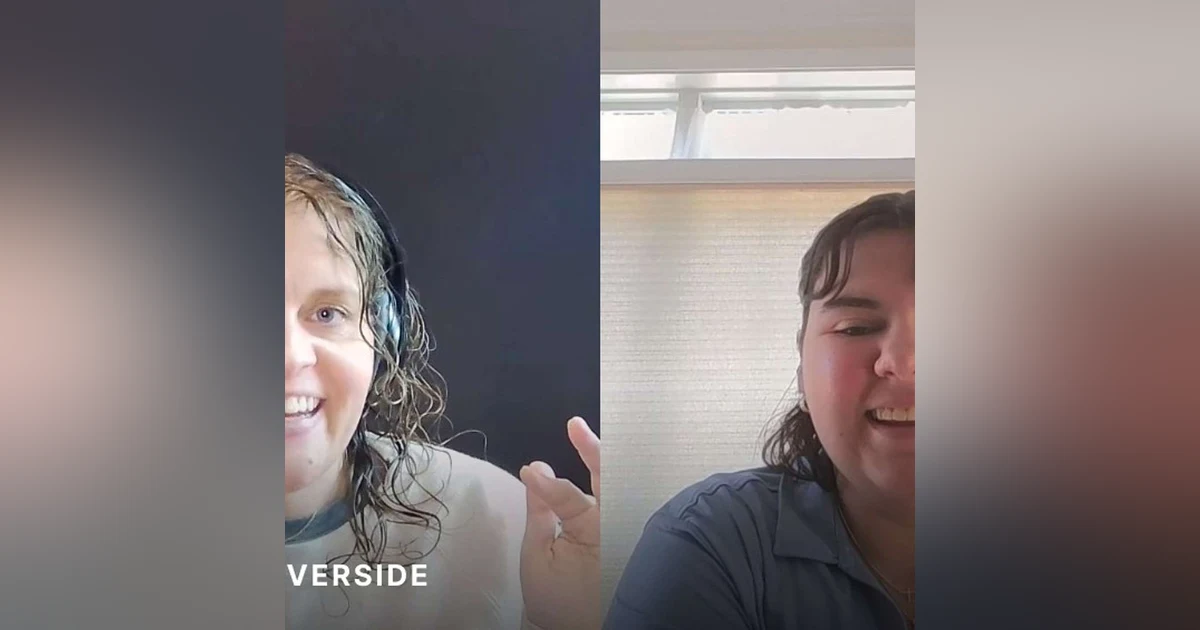
Welcome to Learn to RV the podcast. My name is Tasha, and today I have Maddie Mitchell with me. And Maddie, you are an RV kid, right? I met you at FRVA rally in Erie, Georgia, but we're doing things a little off-filter today because yes, you are an RV kid, but no, we are not going to talk about RVing today. I I want to talk to you about another mode of transportation that you use. Can you tell our listeners at home what it is that you do?
SPEAKER_01I fly airplanes and have been flying airplanes since before I graduated high school.
SPEAKER_00And how old are you right now?
SPEAKER_01I'm 19. I just finished up my sophomore, or halfway through my sophomore year college.
SPEAKER_00That is incredible. That is just the coolest thing I've ever heard. I have always wanted to go skydiving. One day I'm gonna call you and I'm gonna be like, Maddie, it's time I need you to fly the plane, and you're gonna be like, Tasha, that's not what I do. Please call a surgeon. Perfect. You will be my skydiving buddy. Yeah. You you come from a line of pilots, right? Can you tell me that story a little bit? I know that you've told me, but can you tell our listeners at home about that? Yeah.
SPEAKER_01In the 1930s and 40s, I'm not sure which decade typically, my great-grandma got her pilot's license, and then my great grandpa got his, and they both worked for the Boeing Corporation. My grandpa, who never really pursued flying, but is he sold an airplane for the first time, which is like when you're allowed to fly an airplane by yourself, and he went on to work for Boeing as a machinist. I remember him saying, like, yeah, he just went out and broke things for fun because that's what we got to do. And like, that's crazy. You guys were just snapping wings for fun. And then his sister sold an airplane, and then his brother was a Coast Guard pilot and then a pilot for Alaska Airlines. After that, my dad discovered flying when he was in college uh through his best friend's white. Not even through his parents or his grandparents, but through his best friend's white, he discovered flying and just said that's what I'm gonna go do. And so he um started flying in 1999. I was with an airline in like 2002, 2003 time frame. And then as soon as I was born, pretty much, I knew I was gonna fly airplane. I was six months old, and my first word was airplane. Uh, I wish I was kidding her.
SPEAKER_00That is awesome. So, what I love about this is that even with your dad, who by the way learned how to fly the year that I graduated high school. So I feel like I was not doing as much as he was doing in 1999. 1999 was a big year all the way around, but your dad was learning some really big things. Even though your dad is in that lineage, he learned from a woman as well. So you have like really strong women in this line of pilots that have led you to flying, which is really cool because you're getting ready to participate in the air race classic. And that also is this incredible women-backed program. Can you tell us about that?
SPEAKER_01The Air Race Classic started in 1929 by pioneers like Louise Stadin, who many people haven't heard of, but they put up a million air heart. He was one of the original racers as well. These women had to have a pilot's license and 100 hours in an airplane flying solo. I don't remember the exact number that raced that year, but it kind of became a tradition after that. It was called the All Women's Air Race back then, I believe, or nicknamed the Powder Puff Derby. And then in the 1970s, it changed names to the Air Race Classic, which is what it is today. It's a 2400-mile cross-country air race. And that doesn't mean we're flying across the country. It just means we're flying legs that are greater than 50 miles. So this year it starts and ends in Illinois. So we're not flying from like coast to coast, but we're doing a big circle around the Midwest and Southeast. So 2400 mile cross-country, about 55 teams of two, three women per team compete each year. And my team has three. And it's just a great opportunity to keep carrying on the legacy of these pioneering women. I think it's just really cool though that we get to carry on their legacies and we get to kind of create a history of our own by doing what they did.
SPEAKER_00I want to talk more about the Air Race classic. I want to make sure that we cover like how you and your teammates are getting there, what you guys have had to do to get there. So we're gonna come back to that, but I want to talk a little bit about your relationship with flying. And I want to know what is it about flying that gets you excited? What is it that you love about flying? Why a plane instead of say a motorcycle or a race car?
SPEAKER_01The first time I got into a small airplane, like that I can't remember. I was 13. And I just remember getting off the ground and being like, this is the coolest thing I have ever done. Can't describe that feeling. You're just like, you're you're floating, you're off the ground. You're looking down, you're like, wow, this is crazy. And I don't know if it's just, you know, being able to look out and see what's happening, or if it's the idea that you have a sense of freedom you don't feel when you're on the ground. You kind of have that freedom where you can go anywhere you want, do anything you want to an extent, obviously, and not be restrained back. You also get to look over this really cool creation we have and just see everything. The coolest thing about flying for me, I think, is taking off and seeing the sunset. I don't know, you feel that freedom, you get to go up, you get to look outside, and you're like, that is my house, that's crazy. But then you get to go see sunsets and sunrises in the sky. And I don't think there's a cooler feeling than that. And some days when I'm like, I'm going to quit. This is the hardest thing I've ever done. Go take a morning or a night flight, and I'm like, this is why I do it.
SPEAKER_00So, what do you hope to do with flying?
SPEAKER_01I my end goal is to be a pilot to Delta Airlines. My dad flies for them, and I really want to fly with him one day. I think that'd be a really cool opportunity. As well as continue to support women and youth in aviation. Women only make up 7% of the aviation field in general. That's not just pilot anything from the parachute rigor to an air traffic controller. Obviously, flight tenants make up the biggest percentage of that, but seven percent across the board isn't a big number. And so I really want to continue to go support women, but also get kids interested. I was interested as a kid. I want to be that person to take their kid on the first flight where they look outside and go, wow, this is so cool.
SPEAKER_00Why do you think there is such a low percentage of women in aviation?
SPEAKER_01I think a lot of it has to do with it being a traditionally male-dominated field. It's it's really unfortunate that women are still cal getting comments today, like women shouldn't be flying, women shouldn't be up in the air, things like that. And that deters a lot of women in general. Another thing is they're not seeing representation where they need to. The first time I remember flying with a female captain, it was 2014 or 2015 on our flight home from Angridge with my dad. It was his captain. After that, did not tell you a time I saw a female pilot on a thing plane until like 2021. Even walking to the airport, you just see like these guys with gray hair. You never see a girl that looks kind of your age walking through the airport in a sense. Right. Just like, is this just an old man sport? Am I not allowed to do this? And so I feel like lack of representation is really one of the biggest driving factors, but as well as still the comments women can get about not being able to fly. And while I've noticed a lot of those are mentioned in more of a joking manner, it still sucks.
SPEAKER_00So you're part of the Southern Sky Magnolias, and you and both of your teammates, obviously, all three of you are young women, or else you would not be flying in the air race classic. And I'm sure that all three of you have different backgrounds, but all three of you are coming out of Georgia. How did you guys find each other in Georgia with such a low number of women in aviation? How did three brilliant young women in Georgia find each other?
SPEAKER_01We all live within 30 minutes of each other, which I think is awesome. So it makes it easy for us to get together. But we are all members of Women in Aviation International's Wheelstone South chapter, which is dedicated to the Atlanta area. It's north-south, pretty much 100 miles around Atlanta. That's what it's kind of dedicated to. So I had joined the chapter six years ago, I believe. So I was younger when I started. And then I met my navigator through the chapter a couple years later, and we figured out we were at the same stage in our training. She was going through a career change, and she's just like, I want to learn how to fly airplanes. And so her and I have been studying together a lot. We're still at kind of the same stage in our training to where we just kind of do our stuff together when we need to. And then our co-pilot, we met her through this organization as well. And I actually used to work at the flight school where she learned how to fly. So I met her at the flight school, but she was a part of this organization. That's where I'd see her. That's where we talked to each other. That's why I got to learn more about her. And again, hers was a I think this was her third or fourth career change. And she's done awesome careers. We all met through this organization of about 200 women, and I'll say all of them are pilots. I would say majority of our board is not pilots. This organization of about 200 women in the Atlanta area. And what I had done to pick out these girls is I sent out an application um through the chapter because you're kind of like keeping it local to us, and we wanted to make it kind of dedicated to us without being a dedicated team chapter. And so they were the ones that applied, and I knew both of them very well. And I'm like, let's do this. This is gonna be the best team ever. Awesome.
SPEAKER_00I saw a thing that said you have 250 flight hours. Is that still an accurate number or has that changed?
SPEAKER_01If I have not crossed the 300 line yet, I will be in like the next week.
SPEAKER_00That is so cool. I want that much time in the air. I'm I'm very jealous. When that says flight hours, is that the beginning of your training on, or is that actual time that you've spent in control of the plane? You are the captain, like you are the pilot. You are this is your flight.
SPEAKER_01Yeah, I'm gonna say it's a solid mix of both because you're not considered the pilot in command until you're flying an airplane by yourself, or once you got your first pilot's license, your private pilot license. So all the original time I technically was not the we call it the PIC, but I was the one still flying the airplane while I had a flight instructor next to me. And then once I sold an airplane, all that time kind of added into there as captain, pilot, and command time. Pretty much the start of my funding, but it was only when I was flying with certified flight instructors. It wasn't just like a first thing be like, you want to come fly my plane with me? I'm not a flight instructor, so I couldn't go out that type deal. But I could log in as soon as I got in with someone who had like a flight instructor certificate.
SPEAKER_00So now at 19 years old, if you were like, hey, I want to go fly a plane today, could you just go grab a plane and go fly it? Or would you have to go grab somebody?
SPEAKER_01I can go fly a plane. This is I'm gonna get technical for a second. I'm sorry. I can go flying. I'll take it.
SPEAKER_00Give me all the technical.
SPEAKER_01Any single engine airplane that is lighter than 12,500 pounds that does not have retractable landing gear and is not greater than 200 horsepower engine. And I can fly them with the wheel on the nose or the wheel on the tail.
SPEAKER_00Congratulations. That's cute. At 19 years old to have just started like right before you graduated high school. I am so impressed. This air race classic, this is your first time racing? Yeah, this is my first time racing. Are you nervous? Is that the wrong thing to ask somebody who's racing race? I don't know.
SPEAKER_01I hate to hate to say that I'm terrified, but like I kind of am terrified. I don't know if that makes sense. Like, I'm not terrified of going out and flying the plane. I'm just nervous about the new experience and the stuff I haven't done before. Like, you know, I've never flown an airplane at full power for such a long amount of time. And I know that's gonna be a challenge to me. I've never flown over changing terrain that much, maybe just like a little bit of a hilly area compared to around the Midwest, not that hilly, but we're gonna experience some terrain we've never flown over. I've never flown in the middle of summer in some drier or higher altitude areas.
SPEAKER_00How do those types of changes affect the flight as you're kind of maneuvering and adjusting for that as you're flying?
SPEAKER_01So this is gonna sound crazy, but it can actually decrease or increase our performance by a lot. So if we're in an area that, say more mountainous, planes are not gonna want to fly as well as it would at sea level. Or vice versa. If it's at sea level, it'll fly much better than it would be, say, out in like Denver or something.
SPEAKER_00Okay.
SPEAKER_01The other thing we're gonna have to deal with here is the heat. Heat is definitely makes the airplane go slower just because of how the weather systems work. In the winter, I can get the airplane to like 120. We use knots, probably like 130 miles per hour, no problem. Summer closer than 90 knots, just that how I know my fly. This isn't full power, sort of explained differently, but just because of how the air pressure is in the summer versus winter and how the weather systems are moving through, the engine doesn't react as well. The airplane doesn't know what's flying through different weather, but it does know. I don't know if that makes sense.
SPEAKER_00I totally get that. It it doesn't know why, it just knows that something is different and it's reacting, right? Exactly. It's like, I don't know what you've done to me, but you you've done something and I'm not okay with it. Basically, it's like my child when they were a toddler and they were like, I don't know why you brought me here, but I don't like it.
SPEAKER_01Yeah, no, that's exactly it. Uh, the other thing we have to pay attention to is the summer is normally a lot bumpier. So we're gonna get a lot more turbulent in the summer just because of how they're they're called thermal until the air moves over the ground. They can kind of shoot up a little bit more in the summertime than it will in the winter, so you gotta deal with a lot more turbulence.
SPEAKER_00Okay, I would never have expected that. I would expect there to be more turbulence. I don't know. I guess I would have expected there to be more turbulence when it's like spring and fall.
SPEAKER_01Spring and fall are pretty bad when it comes to shifting wind on the ground. But when it comes to shifting when in the air, summer is normally the worst because I hate wow. I can't say I hate. I do like flying, but I do not love flying like early spring, late fall because of how the shifts are, because we'll get like wind gusts up to 30 miles an hour on the ground.
SPEAKER_00Wow. Okay, so you are going 2400 miles, is that correct? You guys are making you guys are making stops as you're going around. How long of a break do you get at each stop?
SPEAKER_01We can take as long of a break as we want. So how the race works is if we are on the ground at one of the stops that the race told us when we stop at, our time pauses completely. So every time we fly into a place, we have to do a low approach over the airport, and then we land every time we take off, we have to take off, come back, do a low approach over the airport. And that's how they calculate our time. So as soon as we're on the ground at one of those stops that's along the race, our time pauses until we take off again and do that next low approach.
SPEAKER_00That's nice. Yeah. So like if someone takes an extra long bathroom break, it's not gonna, it's not gonna break the race time. This isn't like if someone spends too much time getting Fritos at the concession stand, they've just broken the race for everybody. It's gonna pause for everybody. So that's good news. When you guys are flying, since there are three of you, do you guys switch positions or are all three of you guys staying stationary in the positions that you're in when you take off?
SPEAKER_01Every time we take off, we'll stay in our squat. But when they land, we're gonna switch spots 100%. It's a lot for one person to be flying that many miles. We'll rotate legs based off of since I'm the pilot, I'll fly the first leg. My co-pilot will fly the second leg, my navigator will fly the third leg, and so on. So we'll kind of do it in that order there. Just so you know, someone gets a break in the back, someone can get maybe more familiar with sitting in the right seat because right seat flying isn't as comfortable for some of us as is for, say, a flight instructor, or you just need a break, or hey, I feel really good right now. I want to fly. Kind of gives us that flexibility there.
SPEAKER_00So, what did you guys have to do in order to qualify for the air race classic?
SPEAKER_01At least two of us had to have a hundred hours of piloting command time, whether that be flying by themselves or flying with someone else in an airplane that they have a pilot's license for. And then on top of that, one of our teammates had to have something called an instrument rating, which is when they're allowed to fly in the clouds or in weather that's a little bit less favorable when it comes to ceilings or visibility. And then all of us had to have a student or private pilot certificate, which all of us have private pilot certificates, and all three of us should have instrument ratings by race start as well.
SPEAKER_00I know that there has been a monetary cost to entering the race, and that can be pretty high. How did you guys raise the funds for your entry fee? On top of your entry fee, was there more money that you guys are needing to raise to be able to fly 2,400 miles? Like who's paying for that fuel? I know how much my diesel for my dual costs to drive from here to Maine. How are you paying for the fuel of an airplane?
SPEAKER_01So, so our team has been doing a lot of fundraising. The past couple of weekends, we've had back-to-back-to-back fundraisers. Today, we're gonna have a fundraiser tonight. Next Saturday, we're gonna have a fundraiser. Last Saturday we had a fundraiser. But we've also been reaching out to potential sponsors, so companies who support things like this. People that help do our instruments in our airplane, they sponsored us a flight school locally to us. They sent us money. And then also uh we've been selling things. So we have Team Tumblr's, which has the racer out, and that was supported by our women in aviation chapter. And they uh kind of like supported that with us, and we were able to sell those for fundraising as well as team t-shirts. So we have t-shirts with our race logo, kind of like this one and out photos that we've been selling as well to help support us, and we've done a whole other fun things. One of our teammates who helps more on the ground side, she's not flying it, but she is helping us with fundraising. She was a Girl Scout, so she has a bunch of airplane charms she had from a Girl Scout event that she's been like, Oh, I'll make charm bracelets out of them. And we've made a solid profit out of selling those churn bracelets. My favorite one was we had a craft fair we went to, so we were able to take all of our teammates' creativity and put it together and brought it to this craft fair. So we had things from paintings to 3D printed figures to charm bracelets and everything kind of in between.
SPEAKER_00That is so cute. I want a charm bracelet. Obviously, you guys are still fundraising. I want to make sure that people know if they want to give to the Southern Sky Magnolias and they want to help keep you guys in the air for the Air Race Classic. How can they get involved?
SPEAKER_01Yeah, so first of all, we have a Facebook, Instagram, and a thread account, which is just Southern Sky Magnolias Art ARC, which you can follow along with our journey through there. We also have a GoFundMe we're putting together for a team, which has been great for additional supporters who say we're not a fundraiser or were but wanted to give more. We have a link to buy our team and Tumblr's as well as send us a message on our social medias for t-shirt. And we have sponsorship opportunities as well. So for people that might look for a company that likes to give back, we have ways you can sponsor us for us giving you stuff in return.
SPEAKER_00I'm going to make sure that all of that's in our show notes. We're getting close to the end, and I want to ask you a couple of questions. I read that there is a scholarship program that you guys are doing for it. Can you talk a little bit about that?
SPEAKER_01So, our goal is to raise enough additional funds to be able to sponsor at least one individual girl or a team of two to raise next year, uh, preferably in the local area. So that would be raising a little over$1,300 to supported team to go next year. That's how kind of we want to give back to our community, whether that be another group from our women aviation chapter races next year, or just another group of young women in general who are struggling to raise the funds. Like myself, I could never afford to do this without fundraising. And so our goal is to put a little scholarship together and hopefully help pay for their team registration or their individual registrations, depending on how much extra we raise and that we don't use to help support the future of air racing.
SPEAKER_00That's awesome. And Maddie, I want to ask you, you had talked about there not being a lot of youth programs. Can you talk a little bit about what youth programs that you know of that might be out there or mentorship programs? Have you encountered any out there that touched you or been a part of your journey to getting your start in aviation?
SPEAKER_01Yeah, so the biggest one is something called the Ron Alexander Youth Aviation Program, which is local to my area. It's been around since 2013 and they put over 100 kids through the program, teaching them either how to become a mechanic or a pilot. So through that, I have gotten enough maintenance skills to be able to work on my own airplanes, as well as I actually got a maintenance job from that, um, working on flight school airplanes for a while. And also, it's completely free. Every 10 hours a kid earns working in the hangar building of lanes, they get an hour of free flight time. All they had to pay for is the deal. And the coolest part is they get to fix the airplane that they're flying. They get to rebuild it. When parts need to be rebuilt, they get to do annual inspections on it. And so how I got my start is I actually, the very first yearly inspection I did was on that airplane. And I ended up getting my tailwheel, which is when an airplane has a wheel on the tail instead of the nose, and you're getting my tailwheel endorsement in that airplane. But other kids, that could be the very first airplane they fly by themselves, like one of my good friends and one of our additional ground support team members. So that's kind of how I got my start in aviation. And now I go back and I support that program as one of the instructors. We call mentors. I work with another mentor who is restoring a 1929 Kinnerbird, which is a biplane that Charles Lindbergh at not that specific one, but Charles Lindbergh taught his wife how to fly in that type of airplane. So I'm helping them restore that airplane and teaching the kids the basic skills they need when I can down there, as well as teaching ground lessons. So they when they're ready to fly, they know the ground knowledge that goes into flying. It is the coolest opportunity I think I've been given. And I am very fortunate that I was able to get involved. These kids are going great places. The alumni, a bunch of airline pilots now or mechanics at major airlines, they're off doing incredible things. We have a couple more recent alumni, which my friend and I, myself, were both. She's an instrument-rated pilot. I'm almost an instrument-rated pilot who just kind of kept going. And now we go back and we teach the kids how to build, but also how to fly airplanes on the ground, not in the air, because we're not flight intractors yet. Uh so it was a great opportunity for the two of us to be able to get that putting to us and then us be able to get back. Another program that I've been involved with each year, which despite the name Boys Are Welcome, is Girls in Aviation Day, which is put on by Women in Aviation International each year. And it's a day of education that each individual group from Women in Aviation, like the chapters, put on. I've helped plan multiple of these events as well as volunteer at them. And I've worked with international to help put out more publicity about these, whether it's through interviewing students at these events or if it's helping create fires. So that event is a great way to dip your toe into aviation. What opportunities are out there? Is this a I don't want to be a pirate, but I still want to be around airplanes, what can I do type deal? And these kids do everything from talk to pilots to learn who makes the asphalt or run noise. There's other opportunities out there as well, like summer camps that I was involved in as a kid that really helped me get to where I am now. The coolest one was something called Minnesota Ace Camp, where they take kids to flight gliders, air traffic control staff. Our um tours to take them to Minneapolis, St. Paul Airport to tour airplanes and see how the inner workings of an airport work. I don't want to say there's a lot of programs out there. There's a decent amount of programs out there, but they're just not well known because they're so regional or so niche, like girl wing aviation that you're not gonna send your 17-year-old boy to that, even though of course they're still welcome to a tight deal.
SPEAKER_00What do you think participating in aviation does for a person? Why do you think there's a value in that at a personal level? Obviously, we've come to rely upon aviation for basic travel needs, but for the individual, what do you think it does for them?
SPEAKER_01Yeah, I think it helps individuals build leadership skills, also individual thinking and communication skills. One of the biggest things I've learned while flying is how to communicate properly, not even while talking to uh air traffic control, but whether it's talking to my passengers and briefing them through what we do in case of an emergency or it's talking to my flight instructor and learning proper terminology for flying airliners in the future. Leadership, you need to be a leader to fly airplanes. You can't just be a follower because you gotta be able to make your decisions. Is it gonna be a no- or a no-go? Am I safe to fly today or not? Do I really want to take this airplane out there or am I just gonna say, meh, it's good enough? And so I think leadership is another big skill that comes out of the flying.
SPEAKER_00That's awesome. Well, Maddie, I have just loved talking to you. I think that you're incredible. I think that if everybody had five minutes to sit down and talk to you about aviation, that 7% of women in aviation would jump up dramatically, very, very quickly. Is there anything that we've not touched on that you want to plug or get out there for people to know about? Can I give a shout-out to somebody? You absolutely can.
SPEAKER_01Two biggest shout outs is first of all to my dad, who is the reason I'm here, and my flight instructor and the guy giving us the airplane to do this, but also the guy who's gotten me to where I am now, um, whether it's through my education, through high school, because I was homeschooled, taking me around the world, or teaching me how to fly airplanes. Would not be here without him and my mom, of course. And the second one is to another past fellow RVer, Robin Lawz, who is the reason I am racing the air race classic and has been my biggest mentor through my air racing experience. Even though she's not my dedicated mentor that's the air race assigned to us, she is still always there to answer my questions and again is the reason I race now. Whether it be uh just us meeting through friendly conversation or being together on a trip or being at a conference, she has always been there as a mentor and to support me through my aviation journey and again lead me into air racing. I probably would not be as prepared for the race as I think I am if it weren't for her.
SPEAKER_00I think she's wonderful. So that's a that's a good person to have in your back pocket and in your corner. I have these dates for the Air Classic, and I wanna make sure that I let everybody know that it is June 23rd through June 26th. So you all have plenty of time to get in there and support the Southern Sky Magnolias, get in there and support Maddie. I just think that it is such a worthy cause. I love what you guys are doing. I love the heart behind wanting to make sure that another girl, another team is able to compete next year. And I know how much it has meant to you to be able to compete this year. I just hope that you get to keep doing it. I'm just excited to watch and see what this journey looks like for you guys and how it continues to grow. Thank you so much for setting down with us today. It's Southern Sky Magnolias. Maddie, do you want to give that GoFundMe and the Facebook one more time?
SPEAKER_01You'll find our Facebook and Instagram at Southern Sky Magnolias Arc ARC. Our GoFundMe will be support the Southern Sky Magnolias. And you can find that link as well in our social media bios.
SPEAKER_00For everybody who's here, go support them. And thank you so much for joining us around the campfire today. Like, subscribe, share, and get out there and share the Southern Sky Magnolias information and get them the credit that they deserve. We will see you next time around the campfire.